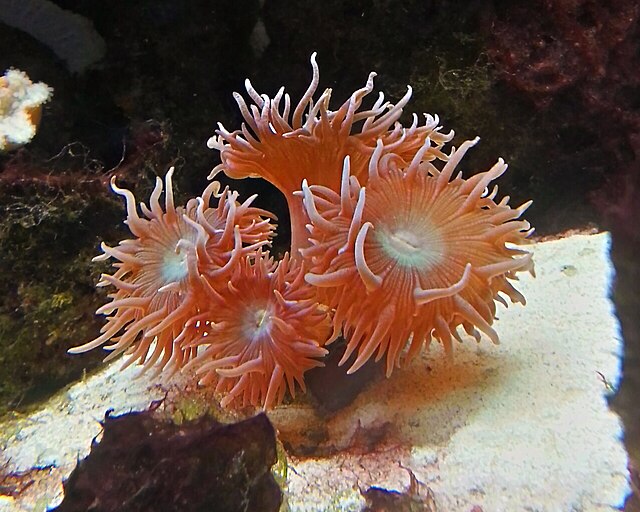
Caring for Lobophyllia and Symphyllia | Characteristics, Feeding, and Placement of Large Flower Corals
A general guide to distinguishing thick-bodied, large LPS corals like Lobophyllia and Symphyllia, with tips on lighting and water flow, damage-free placement and feeding, spacing from neighboring corals, and recognizing signs of stress.
Key Takeaways
A general guide to distinguishing thick-bodied, large LPS corals like Lobophyllia and Symphyllia, with tips on lighting and water flow, damage-free placement and feeding, spacing from neighboring corals, and recognizing signs of stress.
Lobophyllia and Symphyllia are large, thick-bodied LPS that have long been popular in the aquarium hobby. In the trade, they are often grouped together under the name "Large Flower Corals," and both offer vibrant colors and intricate patterns. However, because their tissue is thick and soft, they are easily damaged, and placement and handling require some care. This article covers how to distinguish between the two, lighting and water flow guidelines, feeding, spacing from neighboring corals, and signs of stress—all presented as general care principles.
How to Distinguish Lobophyllia from Symphyllia
Lobophyllia and Symphyllia are both LPS with large, thick-bodied polyps, and they are often discussed together in aquaria. The primary way to distinguish them is by how the polyps are arranged.
- Lobophyllia: polyps are individually distinct and rounded in shape, often appearing raised or prominent
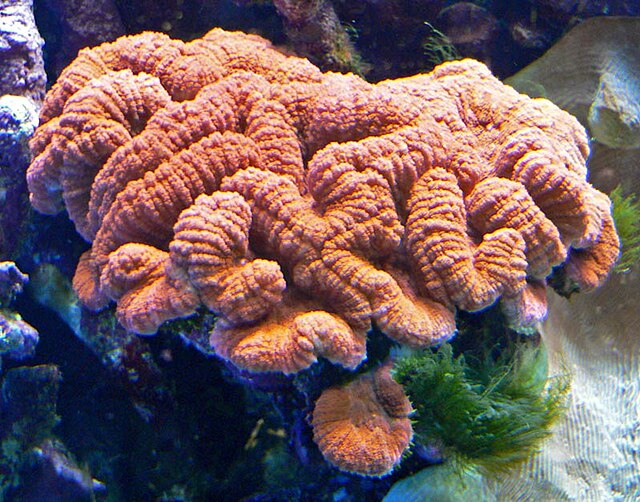
- Symphyllia: polyps are connected to one another and form ridge-like (grooved) patterns that create a brain-like, undulating appearance
The ridge-like arrangement seen in Symphyllia is also characteristic of Brain Corals. However, individual specimens can appear intermediate depending on their growth stage and colony form, and photographs alone may not always allow for certain identification.
Additionally, coral taxonomy is subject to revision as new research emerges, and common names do not always correspond one-to-one with scientific names. It is not uncommon for names used in aquarium shops to differ from those in scientific references. When selecting corals, focusing on the actual appearance and care characteristics rather than relying solely on the name will help you avoid problems.
Color and Pattern Diversity
The appeal of this group lies in the wide range of colors and patterns. Base colors alone are diverse, ranging from green and red to orange, purple, and blue-toned hues. Additional colors often appear along the edges or valleys, and it is common to see specimens with multiple colors blended within a single colony.
During distribution, corals are often named based on their color and pattern characteristics. These names can vary between shops, and the same name may refer to different specimens elsewhere. If you are interested in lineage and provenance, keeping records and managing your collection based on observation rather than names alone will make organization easier later. Information on varieties of interest can also be found in the catalog.
Note that color expression depends on lighting type, water quality, and the specimen's condition. If the color you saw at purchase changes in your tank, do not immediately assume the coral is unhealthy—give it time to acclimate.
Lighting and Water Flow Guidelines
Lobophyllia and Symphyllia are not generally light-demanding corals. Lighting should be moderate or below moderate, as placing them abruptly in bright conditions can cause tissue retraction or color changes. It is safer to start newly acquired specimens under lower light and gradually acclimate them over several weeks. For details on light quantity principles, see LPS Lighting and PAR Guidelines.
Water flow, too, should be gentle and not excessive. Thick tissue is easily buffeted by strong currents; direct, forceful flow can cause the tissue to be pulled or abraded against the skeleton's sharp edges, leading to injury. Conversely, with no water movement, waste and debris accumulate more easily on the tissue and in valleys. Aim for a level of flow that causes the tissue to sway gently, and ensure proper circulation throughout the tank. Water flow adjustment guidelines are detailed in the LPS Flow Rate Management Guide.
Placement, Substrate Care, and Damage Prevention
With this group, special attention must be paid to the skeleton beneath the thick tissue. The skeleton's edges have sharp points that can wound the tissue from within during movement or placement. Damage can lead to widespread stress, so handle carefully.
The basics of placement are as follows:
- Minimize handling; decide on the placement location before bringing the coral home
- When lifting, support the skeleton or base rather than pinching the tissue
- Ensure the skeleton's edges do not cut into the substrate and the tissue is not pinched
- If placing on sand, position it where suspended sand will not settle on the tissue
- Place it where water flow will not cause sand to abrade the coral's edges
An unstable base can shift or tilt as the coral grows heavier. Placing it on a stable, flat rock or sand bed with full contact will minimize stress to the tissue. For acclimation guidelines when introducing the coral to the tank, see Coral Acclimation (Drip Method).
Feeding and Spacing from Neighboring Corals
Feeding follows the principles of LPS target feeding. While photosynthesis provides energy, feeding can aid growth and health; offer small portions of food gently near the polyps. Overfeeding degrades water quality and causes uneaten food buildup, so start with small amounts and adjust frequency as you observe the coral's response. Feeding response varies between specimens—lack of immediate feeding behavior is not necessarily a problem.
Pay attention to spacing from neighboring corals. This group may extend sweeper tentacles at night and use nematocysts to attack surrounding corals. As they grow, they spread farther than expected, so generous spacing at introduction is important.
- Leave sufficient distance between neighboring corals, accounting for their eventual size and sweeper tentacle reach
- Maintain extra distance from long-tentacled corals like Euphyllia, as they stimulate each other
- Observe sweeper tentacle activity at night, and adjust placement if contact seems likely
For more on placement strategy, see LPS Placement, Spacing, and Aggression.
Signs of Stress and Daily Observation
Daily observation of polyp extension and tissue firmness makes it easier to notice changes. For example, the following signs may indicate environmental issues:
- Tissue remains severely retracted and does not expand
- Color fades suddenly or becomes dull and cloudy
- Skeleton becomes exposed at the tissue edges
- A slimy or whitish coating appears on the tissue surface
These signs can result from various factors: light, flow, water quality, compatibility with neighboring corals, or physical injury. Since identifying a single cause is difficult, start by reviewing your lighting and flow settings, placement, and spacing from adjacent corals. Tips on observing polyp extension are also found in LPS Polyp Extension Monitoring.
If the condition does not improve or you are uncertain, consult a knowledgeable aquarium shop or specialist. Including photos and information about your tank setup will help them understand the situation better.
Summary
Lobophyllia and Symphyllia are attractive, thick-bodied LPS with rich coloration. The key to distinguishing them is whether polyps are individually rounded or form valleys; however, taxonomy is subject to revision, so avoid becoming too attached to names. Success comes down to basics: moderate to subdued lighting and flow, gentle handling that avoids damaging the sharp skeleton edges or tissue, small frequent feedings, and generous spacing from neighboring corals. Make daily observation a habit so you can catch any changes early.