Differences Between Corals and Sea Anemones | Common Features and How to Distinguish Them as Cnidarians
This article explains the similarities and differences between corals and sea anemones from the perspective of the cnidarian group, and describes how to distinguish them by appearance.
Key Takeaways
This article explains the similarities and differences between corals and sea anemones from the perspective of the cnidarian group, and describes how to distinguish them by appearance.
Are Corals and Sea Anemones Related to Each Other?
Although corals and sea anemones have very different visual impressions, both are classified in the class Anthozoa within the phylum Cnidaria, making them, in a sense, relatives. Cnidarians are the collective term for animals that possess cnidocytes—stinging cells used to capture prey and defend themselves. Jellyfish are also included in this group. Both corals and sea anemones belong to the class Anthozoa and share many fundamental features in their basic body structure.
Common Features: The Basic Structure Called Polyps
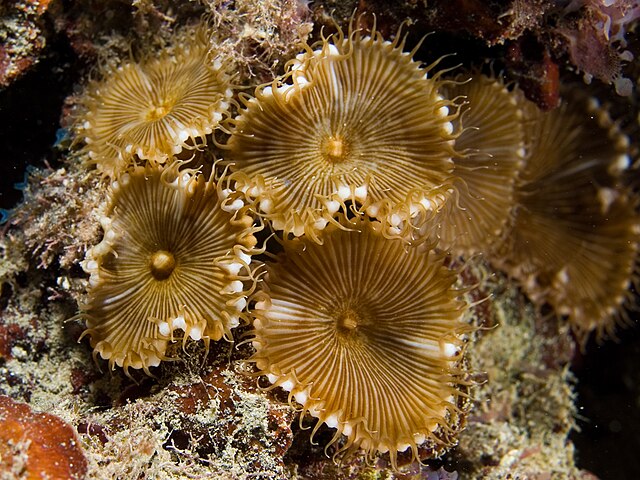
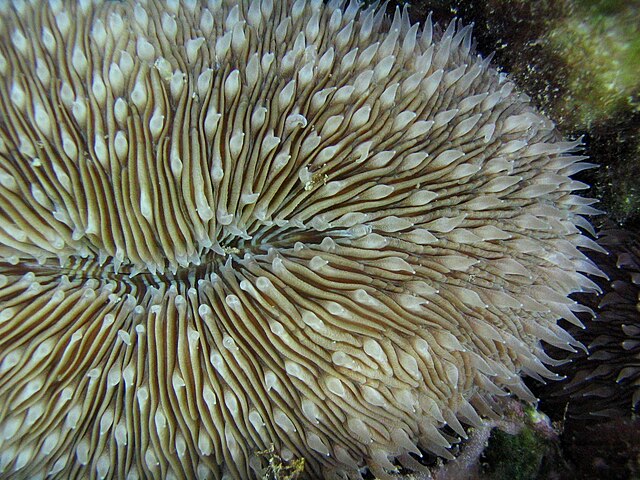
For both corals and sea anemones, the basic unit of the body is a tube-shaped structure called a "polyp." At the center of the polyp is a mouth, surrounded by tentacles. The tentacles contain cnidocytes, which capture small plankton and carry them to the mouth. Many species also harbor zooxanthellae symbiotically within their bodies and receive part of their energy through photosynthesis. This symbiotic relationship is explained in detail in Corals and Zooxanthellae | Mechanisms of Photosynthesis and Symbiosis.
The Decisive Difference: Whether They Form Hard Skeletons
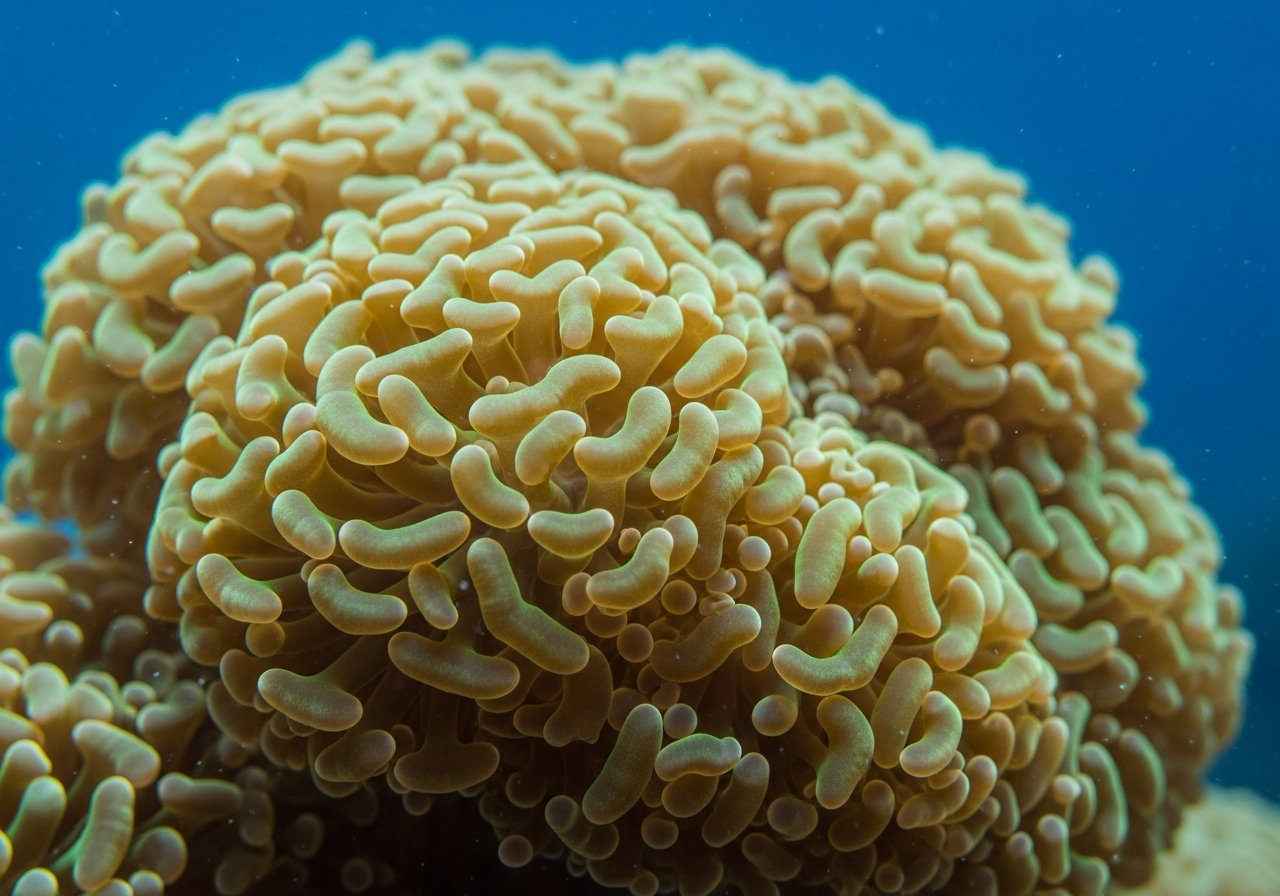
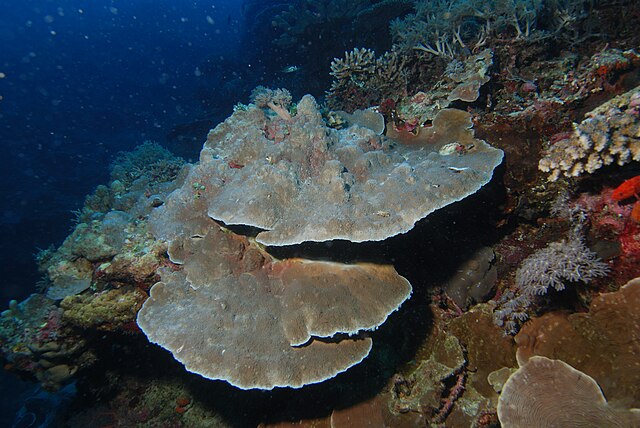
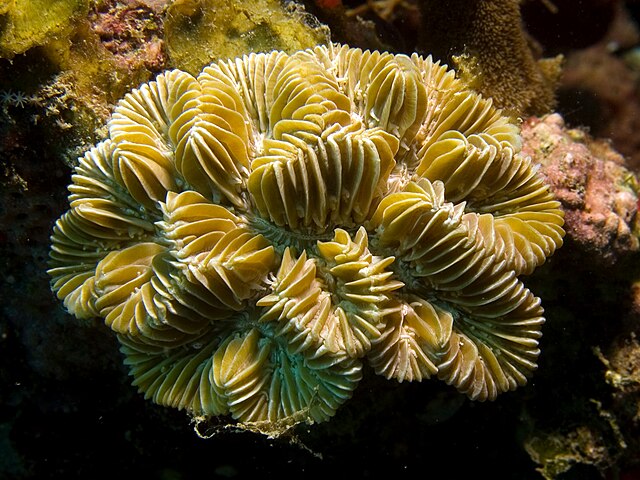
The most significant difference is that hard corals (stony corals) secrete a hard skeleton made of calcium carbonate, whereas sea anemones do not have such a hard skeleton. Acropora and Euphyllia (hammer and torch) are hard corals in which polyps gather together as a colony and grow on a calcareous skeleton. In contrast, sea anemones are solitary individuals that use a foot disc to attach to rocks or sandy substrates and live with a soft body lacking a skeleton. The mechanism of skeleton formation is explained in detail in Coral Calcification and Skeleton Formation Mechanisms.
While soft corals (such as leather corals) also do not form hard skeletons, they differ from sea anemones in that they possess microscopic skeletal elements within their bodies and form colonies composed of many polyps gathered together. For the overall coral classification, see also Coral Types and Classification | Differences and Characteristics of SPS, LPS, and Soft Corals.
Key Points for Distinguishing Between Them
When distinguishing between corals and sea anemones in an aquarium or in photographs, paying attention to the following points will make identification easier:
- Colony or solitary individual: If many similar polyps are densely packed together, it is likely a coral; if a single large individual has spread tentacles, it is likely a sea anemone
- Presence or absence of a hard skeleton: If the base is hard like stone, it is a hard coral; if the base is muscular and moves flexibly, it is a sea anemone
- Tentacle length and movement: Sea anemones characteristically have long tentacles and display large, expansile movements of their entire body
- Presence or absence of movement: Many sea anemones can move slowly using their foot disc, whereas coral colonies are essentially fixed and grow in place
Noteworthy Differences: Symbiotic Relationships with Clownfish
Some sea anemones, such as the bubble tip anemone, carpet anemone, and sebae anemone, are known to have a symbiotic relationship with clownfish. While clownfish are immune to the anemone's toxins and use it as a refuge from predators, sea anemones are believed to obtain nutrients from food scraps and excretions left by clownfish. This symbiotic relationship is explained in detail in Clownfish and Anemone Symbiosis | Mutualistic Symbiosis Between Fish and Invertebrates Seen in Coral Aquariums. While many coral species do not have such clear symbiotic relationships with fish, symbiotic relationships with small animals such as shrimp and crabs are widespread, as introduced in Coral Reef Symbiotic Organisms.
Summary: Two Groups That Look Similar But Are Different
Although corals and sea anemones are members of the same phylum, Cnidaria, and the same class, Anthozoa, the presence or absence of a skeleton and the differences in body structure—whether they are colonial or solitary—result in very different roles within an aquarium. When keeping both in the same aquarium, sea anemones may move and come into contact with corals, potentially causing damage. Therefore, careful attention is needed in layout and placement. Understanding the ecology of each group and considering their compatibility will lead to a stable, long-term aquarium environment.