How Coral Calcification and Skeleton Formation Work | Growth, Alkalinity, and the Relationship with Calcium Carbonate
This article explains how corals create calcium carbonate skeletons, the relationship between calcifying epithelium and photosynthesis, and the differences between skeleton elongation and density.
Key Takeaways
This article explains how corals create calcium carbonate skeletons, the relationship between calcifying epithelium and photosynthesis, and the differences between skeleton elongation and density.
The hard skeletons that form coral reefs are created by the coral polyps themselves within their own bodies. Rather than stacking stones, living tissue gradually deposits crystals using calcium and carbonate components dissolved in seawater as raw materials. Understanding this "calcification" process reveals why calcium and alkalinity (KH) are emphasized in aquarium water management. This article organizes the biological mechanisms of coral skeleton formation itself.
Skeleton Formation by "Calcifying Epithelium" Tissue
Beneath the coral polyp lies a thin layer of tissue that contacts the skeleton—this is where calcium carbonate crystals are formed. This tissue takes calcium ions and bicarbonate ions from seawater, combines them, and deposits them on the skeleton's surface as calcium carbonate in a crystalline structure called aragonite. Rather than the polyp itself being embedded within the skeleton, a thin tissue membrane covers the outer surface of the skeleton and gradually advances calcification outward. The colony grows larger because this calcification continuously occurs at the margins and branch tips of the colony.
"Light-Enhanced Calcification"—Photosynthesis Accelerates Calcification
Many reef-building corals harbor zooxanthellae (symbiotic algae) within their tissues, and zooxanthellae photosynthesis is known to be deeply involved in the speed of calcification. The phenomenon where calcification rate clearly accelerates under light conditions is called "light-enhanced calcification." It is believed that photosynthetic byproducts and the chemical environmental changes accompanying photosynthesis assist in supplying the materials used for calcification. Even in dark places or low-light environments, calcification itself proceeds slowly, but the coordination with photosynthesis is a major characteristic of skeleton formation in reef-building corals.
Skeleton Materials—Calcium and Carbonate Ions in Seawater
The calcium ions and carbonate-related ions that serve as materials for calcification are naturally abundant dissolved in seawater. Seawater's "alkalinity (KH)" is one indicator reflecting how readily these carbonate ions exist in a state conducive to skeleton formation, and alkalinity becomes depleted as calcification activity increases. Skeleton extension rate (linear growth) and skeleton density do not necessarily correlate; research shows that environmental conditions can produce differences such as "rapid growth but low density" versus "slow growth but high density."
Skeleton Elongation and Density—Diversity in Growth Patterns
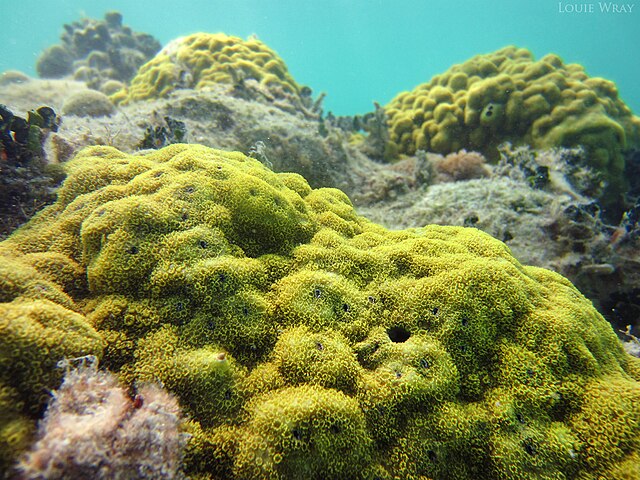
Coral skeletons grow by adding new material at the margins and branch tips of the colony. The speed of this "extension" varies greatly among species; branching corals tend to extend their skeletons at a relatively rapid pace, while corals that grow in massive or encrusting forms show slower extension rates but tend to develop higher skeletal density. Even within the same species, environmental conditions such as light, water flow, and temperature alter the balance between extension rate and density. Rapid growth and robust skeleton development do not necessarily go hand in hand; being mindful of these two growth axes makes it easier to understand differences in colony appearance and structural strength.
The Connection Between Skeleton Formation and Husbandry Management
The content so far addresses the biological mechanisms of how corals form skeletons. For practical guidance on how to measure and supplement calcium, alkalinity (KH), and magnesium in an actual aquarium system, see Coral Tank Supplements | Maintaining the Three Essential Elements: Calcium, KH, and Magnesium and Coral Tank Water Chemistry | The Basics of Alkalinity, Calcium, and Magnesium. For information on how multiple factors such as light, water flow, and nutrient levels affect actual growth rates, refer to Factors Affecting SPS Coral Growth Rate. This article addresses the foundational layer underlying those topics: "why calcium and alkalinity are necessary for skeleton formation."
Internal Skeleton Structure—A Record Like Tree Rings
When coral skeletons are viewed in cross-section, striped structures reflecting growth rate and environmental changes are sometimes visible. Similar to tree rings, layers of varying density accumulate in response to seasonal and temperature changes. In research contexts, examination of such internal skeletal structures can serve as a clue to estimating past growth rates and environmental conditions. Beyond the color and shape changes visible day-to-day in an aquarium, the skeleton also carries a record of growth history within its internal structure; considering this perspective might change how we perceive the passage of time for these organisms.
Summary—Skeletons Are Living Structures Built by Tissue
Coral skeletons are living structures built by a thin layer of tissue called calcifying epithelium that gradually deposits calcium ions and carbonate ions from seawater as raw materials. The fact that zooxanthellae photosynthesis accelerates this process is considered one reason why reef-building corals are widely distributed in shallow, sunlit waters. Understanding the mechanism of skeleton formation provides a foundation for comprehending why supplement management is necessary in aquarium systems. It can be an interesting perspective to observe fast-growing SPS corals like Acropora in the species directory and imagine how their skeletons are constructed.