Coral Bleaching: Causes and Recovery | Understanding the Mechanism of Color Loss
Why does "bleaching" occur when zooxanthellae exit coral tissue and the skeleton appears white? Explaining the main causes and approaches to recovery.
Key Takeaways
Why does "bleaching" occur when zooxanthellae exit coral tissue and the skeleton appears white? Explaining the main causes and approaches to recovery.
The phenomenon in which a coral's color suddenly fades and the white skeleton beneath becomes visible is called "bleaching." Unlike the tissue necrosis (RTN/STN) discussed in Causes and Solutions for SPS Coral RTN/STN (Tissue Necrosis), bleaching differs in that the coral tissue itself remains while the symbiotic zooxanthellae (dinoflagellates) living within decrease or are expelled, causing the tissue to become nearly transparent and revealing the white skeleton underneath. Here we'll examine the mechanism of bleaching, its primary causes, and approaches to recovery.
Why Does Bleaching Occur? — The Symbiotic Relationship with Zooxanthellae
Most corals harbor symbiotic zooxanthellae within their bodies, relying on the nutrients from their photosynthesis and the pigments they produce for coloration. When subjected to various stressors, corals respond defensively by expelling zooxanthellae or the algae themselves weaken and their population declines. As a result, pigmentation is lost, the tissue becomes nearly transparent, and the white skeleton beneath becomes visible—this is the essence of bleaching. Unlike RTN/STN where tissue actually sloughs off, bleached corals often have living tissue remaining immediately after bleaching occurs.
Primary Causes — Rapid Changes in Light, Temperature, and Water Chemistry
The most commonly cited factors triggering bleaching are sudden temperature fluctuations, excessively intense lighting or abrupt changes in light intensity to which the coral is unaccustomed, and rapid shifts in water chemistry parameters such as KH, calcium, and magnesium. As discussed in SPS Coral Lighting and PAR Value Guide, dramatically increasing light intensity shortly after introduction or after changing lighting equipment can damage zooxanthellae and lead to bleaching. Temperature changes similarly carry risk, whether from seasonal fluctuations in room temperature or due to aquarium placement. Extreme nutrient depletion or conversely, general water quality deterioration can also contribute to zooxanthellae decline, making the stable management of the three key parameters mentioned in Reef Tank Water Chemistry | Basics of KH, Calcium, and Magnesium equally important from a bleaching prevention standpoint.
Color Changes Easily Confused with Bleaching
Not every instance of coral color fading is actually bleaching. When lighting color temperature or spectrum is changed, the zooxanthellae population may remain constant while only the apparent coloration changes—this is distinguished from true bleaching. Additionally, as corals gradually acclimate to new lighting conditions, their color may naturally shift over weeks. The key distinction between simple color shift and bleaching is whether the change occurs rapidly and whether the skeleton becomes visible enough to shine through.
Bleaching-Prone Species and Observation Tips
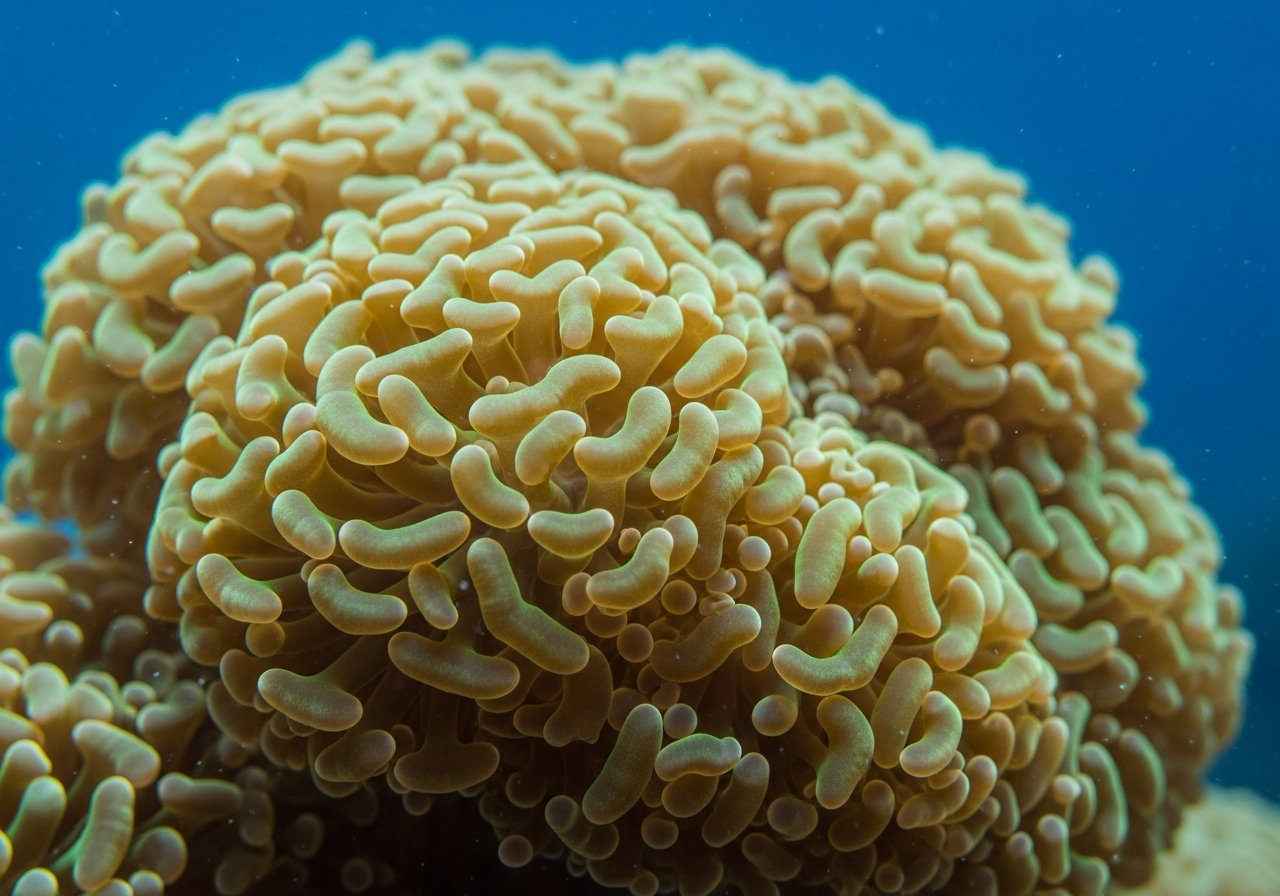
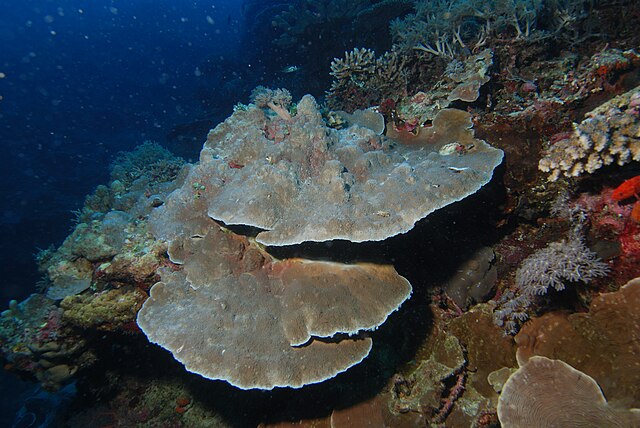
Generally, SPS species such as Acropora (staghorn coral) and Montipora (disk coral) are sensitive to light and water chemistry changes, with relatively frequent bleaching reports. However, LPS species like Euphyllia can also lose color when subjected to excessively intense light or sudden environmental shifts. Daily observation should include checking whether the branch tips or specific surfaces are fading first, and noting any unusual changes in polyp extension or mucus production compared to baseline—early detection at these stages is key.
What You Can Do for Recovery
Immediately after bleaching occurs, the first step is to identify and remove the stress factor causing the problem, preventing additional stress from compounding. If lighting is too intense, reduce it by one level; if temperature or water chemistry has shifted abruptly, prioritize stabilization. If sufficient zooxanthellae remain, color may gradually return as the environment stabilizes, but recovery from near-complete zooxanthellae loss can take weeks to months, and the original color is not guaranteed to return. Hastily increasing lighting or adding large doses of supplements often backfires, so consciously allow changes to occur slowly.
When Improvement Isn't Visible, Consult an Expert
If bleaching is widespread or shows no signs of improvement despite intervention, fundamental issues may be lurking in overall tank water chemistry or system function. Rather than bearing the burden alone, consult with reef aquarium specialists or experts experienced in coral care, providing them with water chemistry data and information about when bleaching began. Since individual variation and tank-specific conditions play a large role, relying solely on definitive information can be counterproductive—reviewing your approach based on your specific circumstances is the fastest path to recovery.
Bleaching is a visually striking phenomenon due to the dramatic color loss, but if tissue remains, recovery is possible. Identifying the stress factors that caused the problem and maintaining stable conditions while patiently observing will support recovery from bleaching.