How to Propagate Star Polyps and Where to Cut
This article introduces considerations for cut placement when propagating star polyps, and key points for creating the environment to establish cut tissues.
Key Takeaways
This article introduces considerations for cut placement when propagating star polyps, and key points for creating the environment to establish cut tissues.
What Kind of Coral Are Star Polyps?
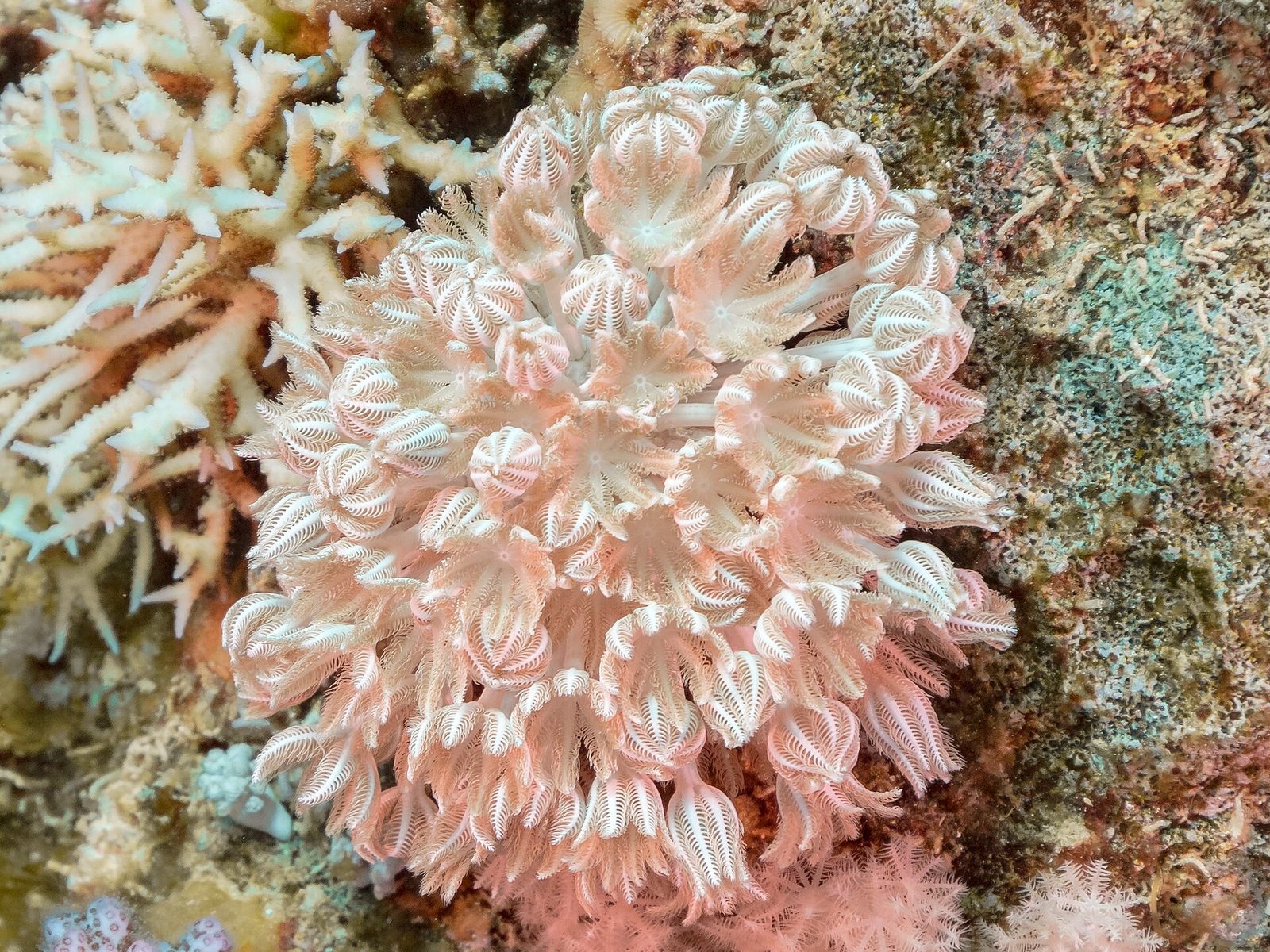
Star polyps are soft corals that spread across rock surfaces, with many small polyps opening in a star shape on a common basal tissue. Because they are hardy with rapid growth and spread thinly over rocks and live rock surfaces in aquariums, they are often introduced as beginner-friendly soft corals.
Other soft corals that spread similarly by basal tissue include green star polyps, but because the spreading pattern and easily-propagated areas differ by species, when attempting propagation it is important to first carefully observe the growth pattern of your target coral.
Basic Approach to Propagation
There are two main propagation methods for star polyps: cutting with the basal tissue intact, and fragmenting the colony from the base rock. The basic principles for fragmenting and cutting introduced in Soft coral propagation and fragging generally apply to star polyps as well.
- Select a healthy colony with the basal tissue sufficiently spread out
- Cutting young tissue spreading outward at the edges, where polyps are sparse, tends to attach more readily than cutting from the dense central region
- Ensure the cut tissue is large enough to be securely anchored to the new base
The key to reducing failures is to avoid forcing large cuts and instead keep sizes in mind that allow both mother and daughter colonies to recover easily.
Considerations for Cut Position
When deciding where to cut, the ease of regeneration afterward is said to change depending on which part of the basal tissue is removed. Generally, the growth margins where polyps are sparse and the basal tissue is thin are young tissue, and attachment after cutting is thought to proceed relatively smoothly. Conversely, the central region where polyps have been densely packed and thickened over years tends to suffer greater tissue damage during cutting, and recovery of the mother colony can sometimes take longer.
Use clean tools for cutting, and reducing the number of cut surfaces in a single operation is another point to keep in mind to reduce infection risk. Remember to keep your tools and hands clean before and after the work.
Environmental Conditions for Promoting Regeneration
Immediately after attaching the cut tissue to a new base, while the basal tissue is establishing on the substrate, strong water flow and excessive light should be avoided, and recovery should be allowed in a gentle environment. The adhesion principles discussed in SPS coral frag creation and adhesive methods can be partially applied to anchoring soft corals.
You can confirm whether regeneration is proceeding well by checking the following points.
- Are new polyps beginning to open around the cut edge?
- Is the basal tissue gradually spreading across the surface of the new base?
- Is the cut section on the mother colony remaining stable without discoloration or necrosis?
If these signs are observed, it is a good indicator that attachment is proceeding successfully.
Benefits of Keeping Propagation Records
Soft coral propagation, not limited to star polyps, does not show results immediately after cutting—attachment can take weeks to months. Recording which position you cut from, when you anchored it to the base, and what changes followed provides material for judging in future attempts which areas attach most readily. As described in Coral specimen history and lineage management, keeping propagation progress as a form of specimen record is useful for long-term reflection on your tank maintenance.
Planning for Management of Overgrowth
Because star polyps grow quickly, they can sometimes spread more than expected in the aquarium. While enjoying propagation, it is good to keep an eye on regularly checking how far it has spread and, if necessary, managing it by setting boundaries or thinning it out to avoid crowding other corals' growing space. As also mentioned in Xenia coral propagation and management, the more readily a soft coral grows, the more important it is to balance the joy of propagation with management to maintain your tank long-term.
As with any coral, the key is not to rush propagation, but to observe the recovery of both mother and daughter colonies before moving to the next step, which leads to fewer failures. Proceeding carefully and confirming each stage leads, in the long run, to stability of the entire tank.