Soft Coral Allelopathy (Chemical Offense and Defense) and Activated Carbon/Water Change Countermeasures
A summary of the mechanism of allelopathy—the chemical effects that soft corals exert on other corals—and approaches to countermeasures through activated carbon, water changes, and layout design.
Key Takeaways
A summary of the mechanism of allelopathy—the chemical effects that soft corals exert on other corals—and approaches to countermeasures through activated carbon, water changes, and layout design.
What Is Allelopathy?
Allelopathy is the phenomenon by which organisms release chemical substances that affect the growth and survival of other organisms around them. While this term is well-known in the plant world, even in the sedentary world of corals—competing over limited space, light, and water flow—many species have been observed to release chemical substances into the water to repel surrounding competitors. Unlike physical contact attacks with tentacles, allelopathy is problematic because its effects can reach corals even without direct contact, traveling through the water column.
Why Soft Corals Are Regarded as Actively Engaged in Chemical Offense and Defense
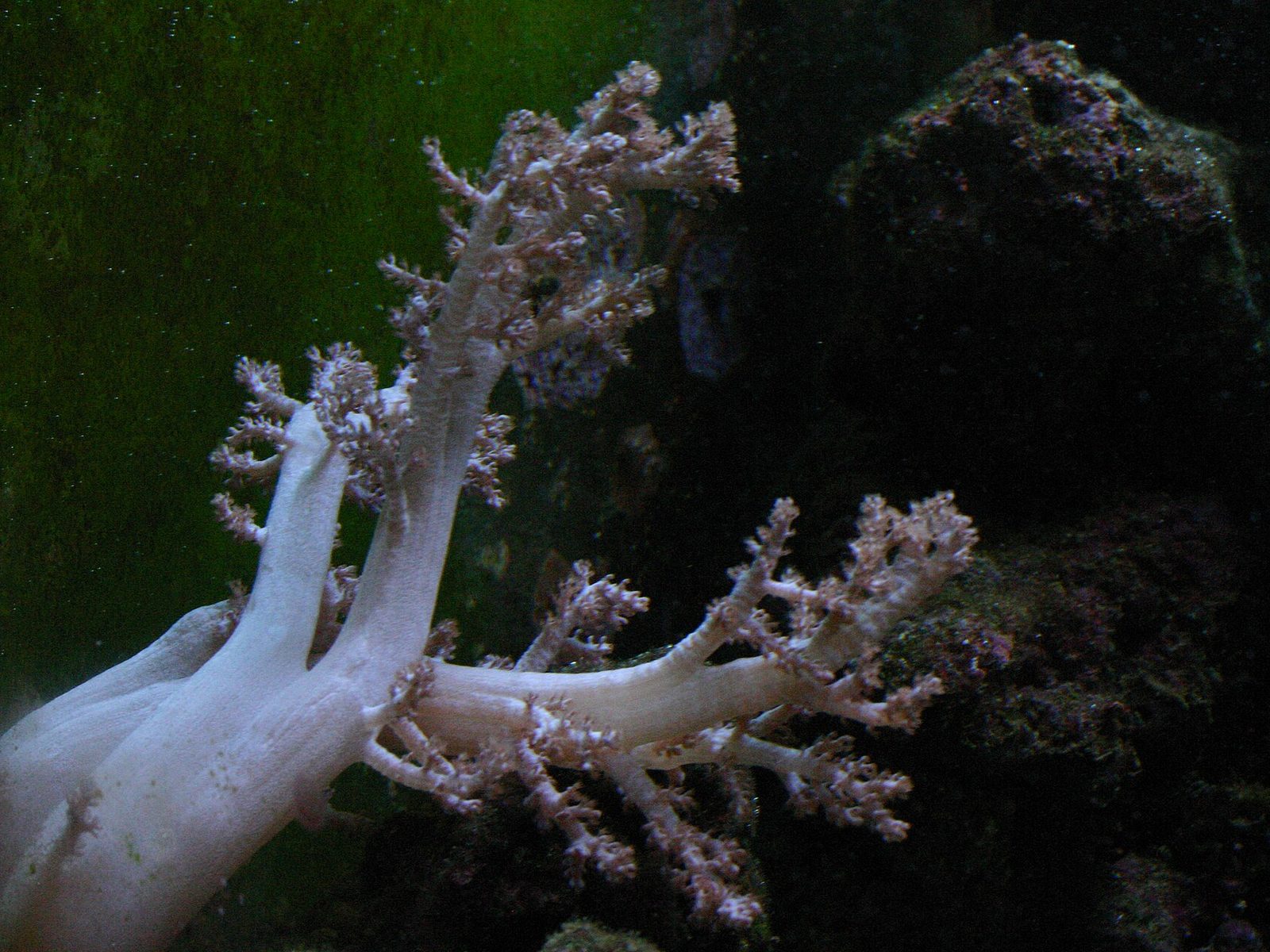
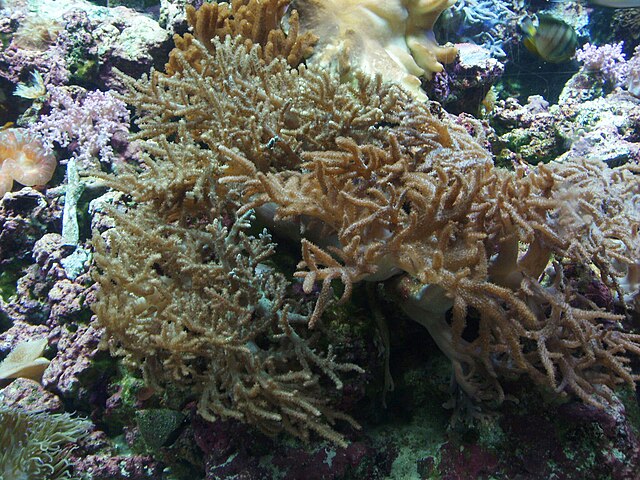
Soft corals such as Leather Corals (Sarcophyton species), Sinularia species, and Kenya Tree are known to accumulate terpenoid and other chemical substances in their tissues and release these into the water, thereby inhibiting the growth of surrounding corals. For soft corals, which lack calcareous skeletons and reproduce at rapid rates, chemical defense and offense are considered one of the most effective survival strategies for securing space.
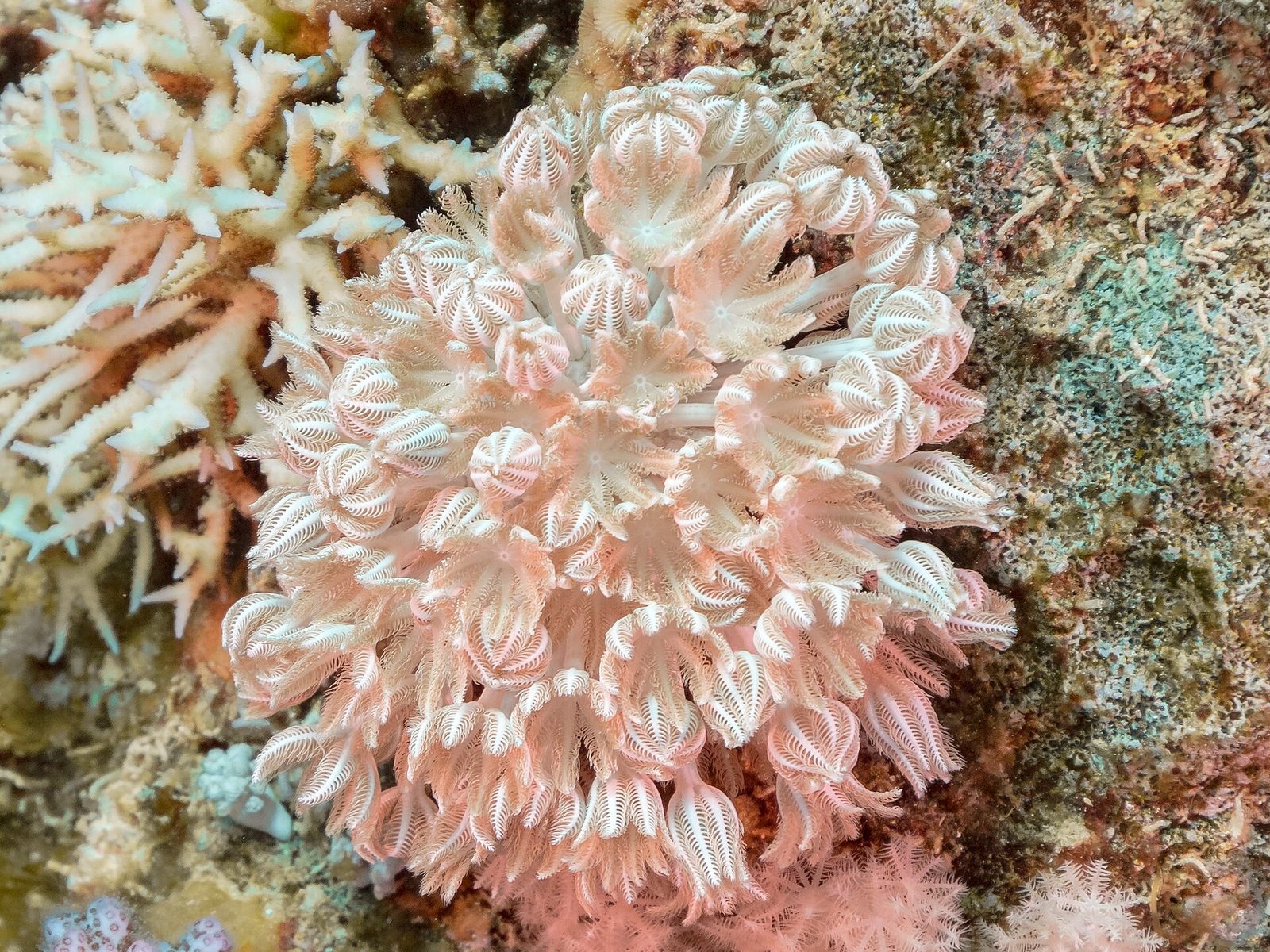
Species like Green Star Polyps and Pulsing Xenia (Xenia) that creep and spread rapidly may expand their habitat while exerting chemical effects on their surroundings, so care is needed when placing them in close proximity to other corals in the aquarium. Further considerations on soft coral propagation and growth strategies are discussed in A Guide to Propagating Soft Corals Through Fragging, which you may also wish to consult.
Symptoms Where Chemical Effects Are Likely to Appear
Corals affected by allelopathy may exhibit symptoms such as poor polyp extension, faded tissue color, and stunted growth. SPS and LPS corals in particular may develop unexplained poor condition when placed near densely packed soft coral areas, even when water quality test readings appear normal, suggesting possible chemical incompatibility.
Since such symptoms can arise from other factors—water quality, light levels, water flow, and others—it is difficult to definitively attribute them to allelopathy alone. It is important to assess the situation comprehensively.
Countermeasure 1: Chemical Substance Adsorption Through Activated Carbon
Activated carbon is widely used as an allelopathy countermeasure. Thanks to its porous structure, activated carbon adsorbs organic compounds dissolved in water and is expected to reduce the concentration of chemical substances released by soft corals. Many keepers operate by placing activated carbon in filter chambers or reactors and passing water through it.
Since the adsorption capacity of activated carbon decreases with use, regular replacement is essential to maintain effectiveness. The timing of replacement varies depending on the bioload and amount of activated carbon in your tank, but the key principle is to avoid leaving it in place indefinitely without attention.
Countermeasure 2: Dilution Effect Through Water Changes
Regular water changes are another allelopathy countermeasure that dilutes accumulated chemical substances. While activated carbon removes chemical substances through adsorption, water changes reduce the concentration itself by replacing water with fresh artificial seawater. Rather than relying on either approach alone, combining activated carbon use with regular water changes promotes overall water quality stability.
Layout Strategies
From the perspective of reducing chemical effects, it is effective to position soft coral areas and SPS/LPS coral areas at some distance from each other and to adjust water flow direction so that water from the soft coral side does not flow directly into the SPS/LPS side.
By gently zoning your entire tank into a "soft coral–centered area" and an "SPS/LPS-centered area," you can accommodate not only chemical effects but also differences in light and water flow preferences, making overall layout management easier. Especially for fast-growing species, leaving them without designated boundaries may cause them to spread into adjacent areas faster than anticipated, so it is important to control their extent through regular trimming and division. For beginner-friendly soft coral selection, see Beginner-Friendly Soft Corals.
Consulting When Improvement Is Not Achieved
If poor condition persists in multiple specimens despite activated carbon, water changes, and layout adjustments, consider the possibility that factors other than allelopathy are involved. We recommend consulting with aquarium specialty shops or experts with extensive coral husbandry experience, communicating your tank setup and symptom progression. Avoiding a single-cause diagnosis and adopting a comprehensive review approach leads to long-term tank stability.