How Coral Fluorescence Works — Enjoying Fluorescent Proteins and Blue Lighting
An explanation of why corals glow brilliantly under blue light, how fluorescent proteins function, the difference between fluorescence and bioluminescence, and what scientists believe these proteins do.
Key Takeaways
An explanation of why corals glow brilliantly under blue light, how fluorescent proteins function, the difference between fluorescence and bioluminescence, and what scientists believe these proteins do.
The moment blue light strikes a coral, it bursts into brilliant neon brilliance—many reef tank enthusiasts love observing their tanks with the lights dimmed. This glow is a phenomenon called "fluorescence," and the coral itself is not actually producing light. In this article, we'll explore the mechanism behind coral fluorescence, understand what it really is, and discuss how to enjoy observing it.
Fluorescence and Bioluminescence Are Different Phenomena
First, let's clarify an important point: coral fluorescence is distinct from "bioluminescence." Bioluminescence is what occurs in fireflies and certain deep-sea organisms—the chemical reactions inside their bodies directly produce light. Coral fluorescence, by contrast, works differently: external light (typically blue or ultraviolet wavelengths) strikes the coral tissue, where fluorescent proteins absorb this light and convert it to longer wavelengths (green, yellow, orange, or red), which are then emitted back out. In complete darkness with no external light source, coral fluorescent proteins do not glow. The reason corals appear so brilliant in aquariums using blue LEDs is that blue light effectively excites these fluorescent proteins.
The Secret: A Family of "Fluorescent Proteins"
Coral tissue contains diverse fluorescent proteins belonging to the same family as the green fluorescent protein (GFP) that became famous through jellyfish bioluminescence research. Some coral species possess proteins that fluoresce not only in green and yellow, but also in red or cyan wavelengths. The combination and concentration of these different proteins create the rich array of color patterns seen across species and individual corals. The amount and types of fluorescent proteins expressed can vary depending on growth environment, even within the same species—this variation is thought to contribute to color differences between individual corals.
Why Do They Glow? — Hypothesized Functions
Scientists have proposed several hypotheses for why fluorescent proteins evolved in corals. One hypothesis relates to "light protection"—the idea that these proteins act as a filter to shield symbiotic zooxanthellae from excessive light. Another hypothesis suggests the opposite: in low-light environments, fluorescent proteins convert limited light into wavelengths more useful for the zooxanthellae's photosynthesis, thereby supporting it. Rather than one explanation being complete, researchers point out that the importance of each function likely varies depending on the species, water depth, and light environment it inhabits. In any case, an important point to remember is that fluorescent proteins did not evolve for aesthetic purposes—they are considered functional components essential to the coral's own survival.
Why Fluorescence Looks Different Across Species and Tissue Areas
In the same aquarium, observers often notice that fluorescence color and intensity vary significantly between species. This is thought to be because different species carry different types and quantities of fluorescent proteins, and these proteins are distributed differently throughout their tissue. Even within a single coral colony, you may notice that the tips where light strikes directly show different fluorescence than the base which may be shaded—this is believed to demonstrate that protein expression levels adjust in response to light conditions. When you change the angle or intensity of aquarium lighting during observation, the apparent change in fluorescence is partly due to these differences in how proteins are distributed within the tissue.
Aquarium Observation Versus Color Enhancement
Fluorescence itself is simply a property of the proteins naturally present in the tissue, so anyone using blue-spectrum lighting can enjoy the glow. On the other hand, "color enhancement"—the practical question of how to maximize fluorescent protein expression through husbandry conditions—involves different considerations: nutrient balance, light spectrum management, and other techniques. For detailed tips on improving coloration through care, see SPS Coral Color Enhancement Basics — Nutrient Balance and Light Spectrum Control. You may also find Corals and Zooxanthellae — Photosynthesis and Symbiosis helpful for understanding the symbiosis itself.
What Fluorescent Protein Research Has Contributed
Fluorescent proteins extend far beyond aquarium aesthetics—they have become widely applied in biological science research. The green fluorescent protein (GFP) derived from jellyfish is routinely used in cells as a tracking marker; this technique lights up and allows scientists to observe where and how specific proteins exist within a cell. The colorful fluorescent proteins found in corals have similarly been explored for research applications as tracking markers, meaning corals have indirectly contributed to advances in life sciences, not merely as ornamental organisms.
Summary — Understanding Corals Through Light
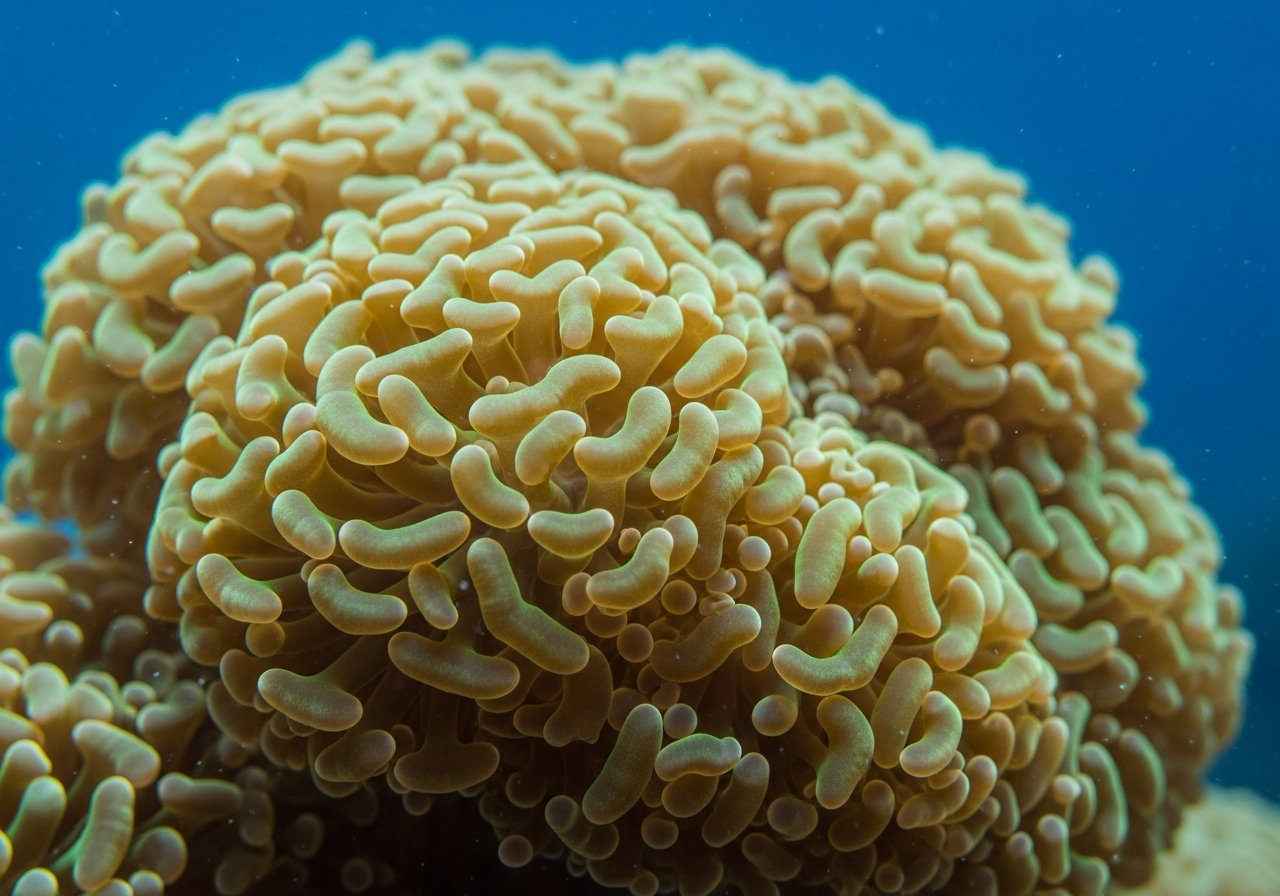
Coral fluorescence is a property of proteins in the tissue that absorb incoming light and re-emit it at different wavelengths. Unlike bioluminescence, it requires an external light source to be observed, and this mechanism is thought to be connected to survival strategies such as light protection or photosynthetic support. The next time you gaze at an Euphyllia species (Hammer Corals, Torch Corals) in your aquarium, noted for their striking fluorescent colors, take a moment to reflect on the survival mechanisms shaping that brilliant glow.