Utilizing UV Lighting and Deep Blue LEDs for SPS Color Enhancement | Combining UVA and Visible Light
In addition to conventional metal halide and T5 fluorescent lighting, combining UVA lighting and deep blue LEDs can bring out the fluorescent colors of SPS corals more deeply. This article summarizes the role of each light source, considerations for implementation, and safety management guidelines.
Key Takeaways
In addition to conventional metal halide and T5 fluorescent lighting, combining UVA lighting and deep blue LEDs can bring out the fluorescent colors of SPS corals more deeply. This article summarizes the role of each light source, considerations for implementation, and safety management guidelines.
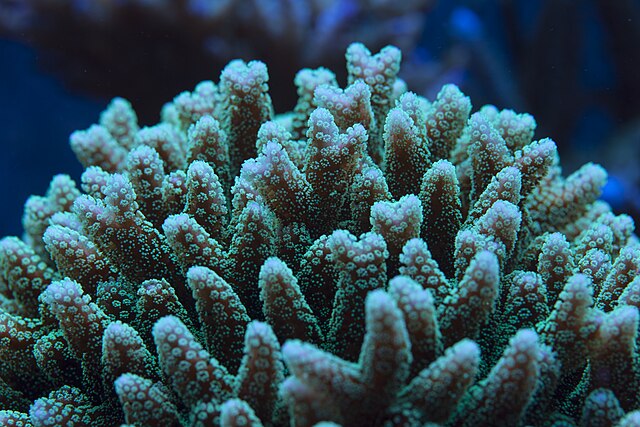
Color enhancement of SPS corals is an important concern for many aquarists. Over the past several years, as LED technology has evolved, new lighting strategies have emerged that were not possible with conventional metal halide or T5 fluorescent bulbs. In particular, combining UVA lighting with deep blue LEDs has been reported to make the fluorescent colors of corals more vibrant and vivid. However, the effective use of these light sources requires proper knowledge and safety management.
Role of UV (UVA) Lighting
Ultraviolet light has a short wavelength and is invisible to the human eye. However, the fluorescent proteins found in corals (such as GFP) have the characteristic ability to absorb UVA and emit visible light. In other words, by adding UVA lighting, the fluorescent proteins within coral tissue become more actively excited, causing them to emit vivid fluorescence. This process is called "fluorescence"—the fluorescent proteins absorb UVA energy and release lower-energy visible light. This is the fundamental mechanism by which UVA stimulates coral coloration.
When introducing UVA LEDs (around 365nm), the standard approach is to use them as supplementary lighting rather than as a complete replacement for conventional metal halides. Main lighting (400–700nm spectrum) is maintained as-is, with UVA added on top of it. Since UVA alone provides insufficient wavelengths for symbiotic zooxanthellae photosynthesis, it is critical to position UVA strictly as "supplementary" lighting.
Effects of Deep Blue LED Alone
Deep blue LEDs (400–420nm) are also effective for bringing out fluorescent coloration. While conventional metal halides emit a broad spectrum, deep blue LEDs concentrate on specific wavelengths, allowing them to excite fluorescent proteins more efficiently. The 400nm wavelength is very close to the absorption peak (excitation wavelength) of many fluorescent proteins, making it particularly effective.
Using deep blue LED alone presents a risk of insufficient spectrum for coral photosynthesis (zooxanthellae photosynthesis). Zooxanthellae photosynthesis requires not only blue wavelengths (450–480nm) but also red wavelengths (650–700nm) to function effectively. Therefore, even when using deep blue as the primary lighting, combination with standard full-spectrum lighting (daylight to cool-white LEDs) is essential. The ideal approach is to operate at approximately 90% full-spectrum and 10% deep blue during daytime hours.
Combined UVA and Deep Blue Strategy
When using UVA and deep blue simultaneously, timing and intensity adjustment are crucial. Many aquarists employ a strategy where deep blue and UVA are gradually ramped up during the latter part of the main lighting period (full-spectrum LED) and used primarily at night. A typical timer setup might look like: full-spectrum on at 6 AM, deep blue added at 3 PM, UVA added at 7 PM, and complete shutdown at 10 PM.
This approach ensures sufficient photosynthesis for the corals during daylight hours while highlighting fluorescent colors during evening or twilight periods, enhancing visual appeal. Simultaneously, excessive light stress on corals (bleaching risk) can be avoided. Experimentally, when UVA exposure time was increased from 2 hours to 4 hours per day, some SPS exhibited mild bleaching, so exposure duration must be adjusted carefully based on your specific corals and aquarium response.
Safety Management for UV Lighting Installation
UVA lighting requires consideration of its effects on aquarists' eyes and skin. Prolonged UV exposure can damage the eyes and cause skin irritation. Depending on tank placement, using appropriate shields or covers to prevent UV light from directly reaching the aquarist is recommended. Limiting work time directly under UVA LED sources to 30 minutes or less per session and spacing multiple work sessions at least 24 hours apart follows established safety guidelines.
Additionally, UVA light sources degrade over time, causing reduced effectiveness. Periodic observation of fluorescent color using test kits and replacing UV sources as needed will yield better long-term results. While LED lifespan is generally around 10,000 hours, UVA LEDs typically last 5,000–7,000 hours, making optical output testing recommended twice per year.
Spectral Balance and Nutrient Management Integration
Even with an excellent lighting system in place, color enhancement will not succeed if nutrient balance is compromised. Strong light stimulation from deep blue and UVA accelerates nutrient consumption in corals. In practice, nutrient consumption rates for the same SPS have been reported to increase 20–30% before and after UVA introduction.
Therefore, alongside lighting upgrades, the supply of microelements (iron, manganese, etc.), maintenance of optimal phosphate and nitrate ranges, and stability of calcium, alkalinity, and magnesium become even more critical. Iron (Fe) in particular directly affects fluorescent protein expression, so maintaining iron concentration around 0.05–0.1 ppm is effective for color enhancement when implementing LED systems.