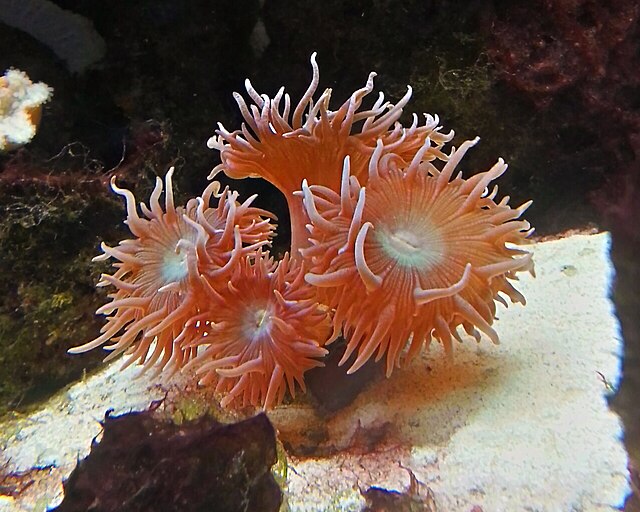
Trachyphyllia (Open Brain Coral) Care | Managing a Unique Species That Dwells on Sand Substrate
Trachyphyllia is an LPS coral that does not cement to rock, instead resting on sandy substrate or in rock crevices by its own weight. This guide explains how to choose placement based on its distinct ecology and how to maintain proper spacing from neighboring corals.
Key Takeaways
Trachyphyllia is an LPS coral that does not cement to rock, instead resting on sandy substrate or in rock crevices by its own weight. This guide explains how to choose placement based on its distinct ecology and how to maintain proper spacing from neighboring corals.
Most LPS (Large Polyp Stony) corals—those with large polyps—anchor part of their skeleton to rock or live rock and grow outward from that attachment point. However, Trachyphyllia (also called Open Brain Coral) is an exception: even as adults, they never cement to rock. Instead, they settle on sand beds or rock crevices, stabilizing themselves through weight alone. Understanding this ecological characteristic is key to long-term success with this species.
The Unique Challenge of a Non-Attached Coral
Most LPS and SPS corals attach to substrate—such as live rock—during their planula stage, then grow their skeleton outward from that anchor point. Trachyphyllia, by contrast, separates from the substrate as it matures, eventually resting on the tank bottom as a bowl- or disc-shaped skeleton. Because of this, placement in the aquarium shifts from "securing" the coral to "choosing where to set it down." Typically, specimens are either tucked into live rock crevices or placed directly on the sand bed; there is no need to glue them down.
Choosing the Right Location
The lack of attachment means that strong water flow can roll or bury the coral. Conversely, areas with stagnant water encourage detritus accumulation on the surface. The ideal location features moderate, steady water movement and sits low in the tank, near the sand bed. Since the coral's skeletal underside and edges can be damaged if completely buried in sand, place it gently on top of the substrate. Monitor the sand buildup around it regularly, as soft tissue damage can occur if the coral becomes too deeply embedded.
Polyp Extension and Spacing from Neighbors
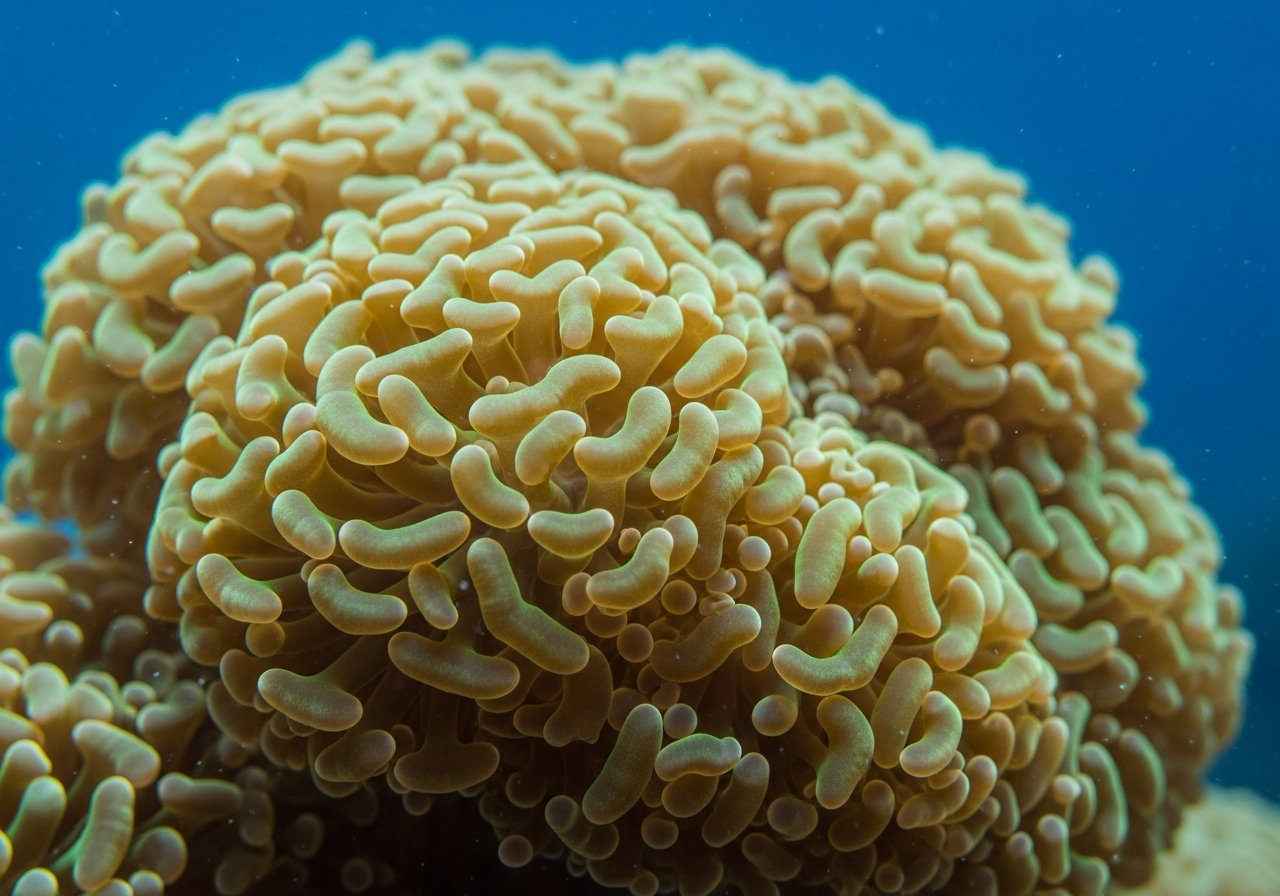
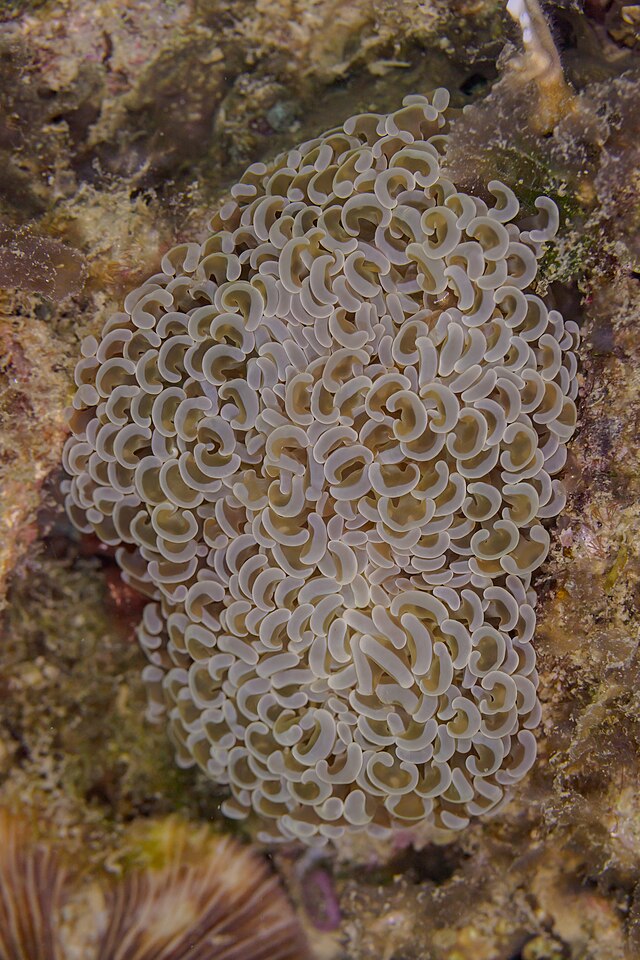
Trachyphyllia often extends its tentacles significantly along the grooved valleys of its skeleton, even during the day, causing the coral to expand well beyond its skeletal footprint. Some specimens display aggressive sweeper tentacle behavior when neighboring corals make contact during this extended state. Before purchase, estimate the inflated size and reserve adequate space to prevent this. Placing it near densely packed SPS frags is especially risky and can damage both corals. Consider spacing as you would with other LPS corals, accounting for the coral's fully extended form.
Feeding and Zooxanthellae Dependence
Like other LPS species, Trachyphyllia obtains energy partly through photosynthesis via its symbiotic zooxanthellae, while also consuming small particles or food when polyps are extended. Individual feeding response varies widely; some specimens show little interest in supplemental food. Rather than forcing frequent feedings, observe the coral for several weeks under stable light and water flow. Learn its polyp opening and closing patterns before deciding whether supplemental feeding is appropriate. This patient approach yields better results.
Recognizing Signs of Decline
Soft tissue recession that exposes skeleton, or a sudden increase in mucus secretion, often signals environmental stress—such as excessive water flow, sand resuspension, or rapid water chemistry shifts. If the cause is unclear or symptoms progress rapidly, do not attempt self-diagnosis alone. Consult a specialist retailer or experienced reef aquarist for guidance.
Mixed Display and Overall Tank Positioning
One advantage of a non-attached coral is the ease with which it can be repositioned to accommodate the growth of other corals or changes in lighting. For example, as SPS frags expand over months or years, you can gradually move the Trachyphyllia forward or lower to maintain separation and prevent contact. However, relocation itself causes stress, so limit moves to what is truly necessary rather than frequent adjustments. Trachyphyllia is generally mild-mannered with fish, but avoid large wrasses and pufferfish, which peck at corals. If housing multiple Trachyphyllia or related open brain species in one tank, space them generously to prevent sweeper tentacle conflict when both specimens extend.
In fact, the lack of attachment—while initially seeming awkward—offers a hidden benefit: it simplifies layout adjustments and maintenance moves. Once you understand Trachyphyllia's ecology and choose an appropriate location, it becomes a rewarding long-term aquarium subject with appeal distinct from other LPS species.
The first few months are especially important for observing subtle variations in sand accumulation and polyp behavior between individual specimens. Rather than rushing to relocate or attempt feeding, document and watch how each coral responds in its current environment. Finding the right resting place for your individual coral is the best path to a stable, long-lasting relationship with this species.