9 Best Corals for Beginners|Hardy, Easy Picks to Start Your Reef
Starting a reef tank? Begin with hardy corals that tolerate change. We hand-pick 9 beginner-friendly species from soft corals, zoas, and LPS, with selection criteria and links to each catalog page.
Key Takeaways
Starting a reef tank? Begin with hardy corals that tolerate change. We hand-pick 9 beginner-friendly species from soft corals, zoas, and LPS, with selection criteria and links to each catalog page.
The corals you choose first have a big impact on how much you enjoy reefkeeping. Rather than diving straight into water-sensitive Acropora (SPS) and bleaching it, the fastest path is to build experience with a tank you can actually maintain—using hardy corals that tolerate change. In this article, we hand-pick 9 species from among the corals classified as "beginner" in the ReefBook catalog, balancing hardiness, availability, and visual appeal.
As a rough guide, difficulty rises in the order soft corals / zoas → LPS → SPS. Choose your first few species from the soft corals and zoas here, and once your tank is stable, expand into LPS.
Four criteria for choosing a coral
When picking your first coral, prioritizing these four points over flashy looks makes failure far less likely.
- Hardiness: Can it tolerate some fluctuation in water quality and parameters? Species that survive the unstable conditions of a freshly cycled tank give peace of mind.
- Light and flow tolerance: Does it adapt to a wide range of conditions without demanding intense light or strong flow? Species you can keep under a single inexpensive LED are easiest to handle.
- Availability and price: Is it reliably stocked in shops and in a price range where a mistake won't hurt much?
- Feeding needs: Does it grow on light alone (little to no feeding required)? Non-photosynthetic corals that require feeding, like carnation coral, are hard for beginners and best avoided.
Soft corals and zoas (your first step)
Lacking a skeleton and tolerant of a wide range of water conditions, soft corals and zoas (relatives of anemones) are ideal first corals. Start by choosing one or two from this group and confirm your tank is stable.
1. Zoanthids / Button polyps
Zoanthids and button polyps are popular zoas whose colorful polyps grow in colonies. Hardy and adaptable across a wide range of light and flow, they let you enjoy watching a small frag slowly multiply. The sheer variety of colors makes them addictive to collect. Some species carry a toxin (palytoxin), so wear gloves during maintenance.
2. Mushroom coral
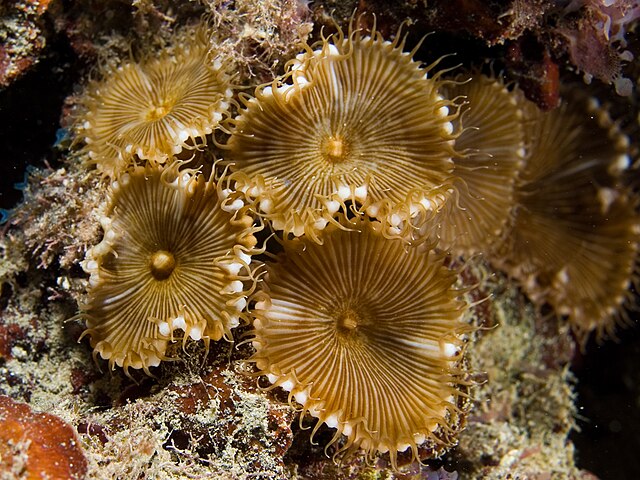
Mushroom corals are a classic beginner coral. They grow under lower light and dislike strong flow, so they thrive even in the lower or shaded parts of the tank. When conditions suit them, they naturally split and multiply—rewarding to grow.
3. Green star polyp
Green star polyp is a soft coral whose vivid green polyps spread in a mat. Extremely hardy and fast-growing, it carpets rockwork in green. It is robust enough to spread aggressively, so placing it a little apart from other corals makes management easier.
4. Toadstool leather coral
Toadstool coral is a mushroom-shaped leather coral. It withstands changes in water quality and forgives moderate fluctuation. It periodically sheds and renews a waxy surface layer, so don't panic if it shrinks temporarily—just watch and wait.
5. Xenia (pulse coral)
Xenia is a soft coral known for the distinctive pulsing motion of its polyps. Swaying with the flow, it becomes a focal point of the tank. It multiplies vigorously in nutrient-rich conditions, so introduce it expecting to manage its growth.
LPS (the next step)
Once your tank is stable, move on to LPS (Large Polyp Stony) corals, prized for their large inflating polyps and vivid fluorescence. Less finicky than SPS about water quality, they offer a distinctly "coral-like" presence.
6. Euphyllia (hammer / torch)
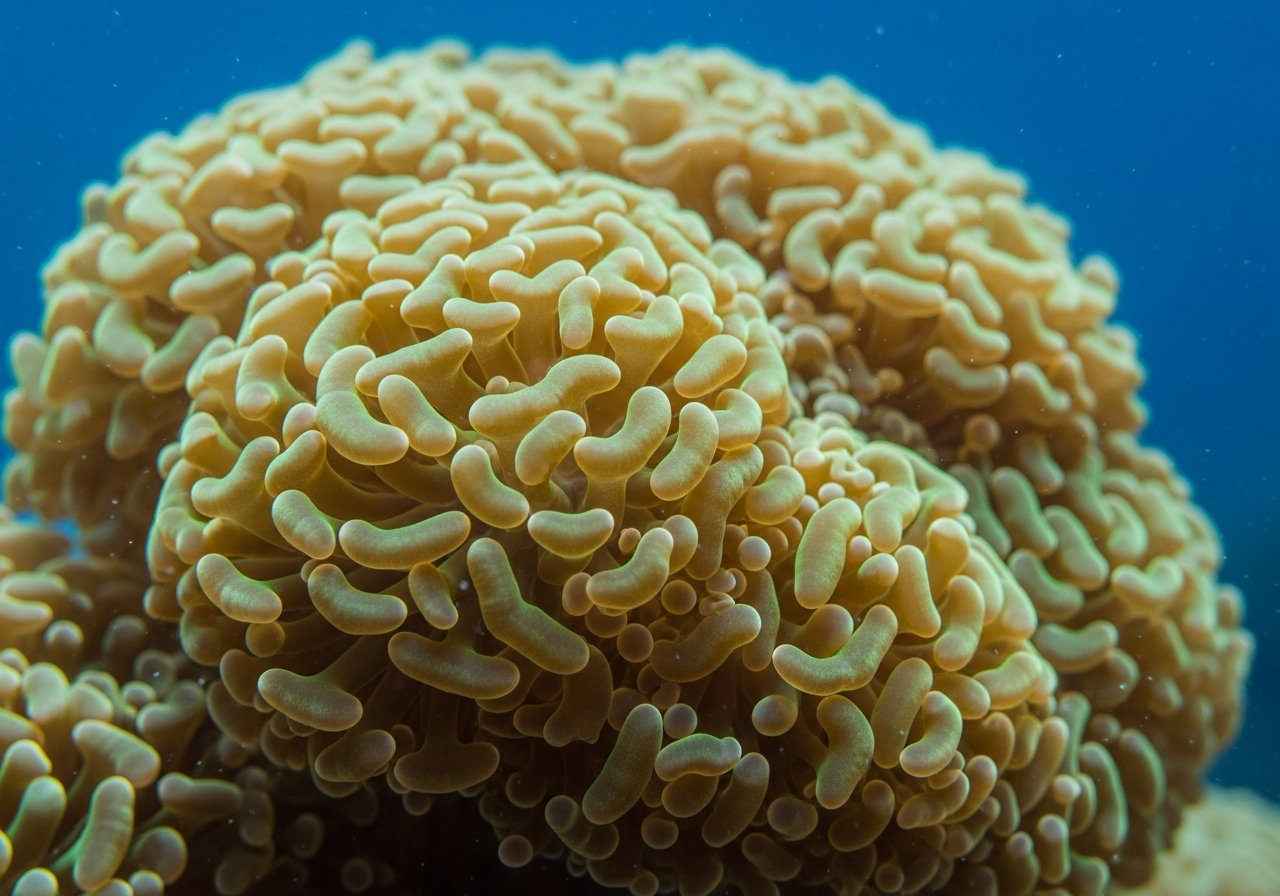
Euphyllia—known as hammer and torch—is a staple LPS with beautiful, flowing tentacles. Hardy and eye-catching, it comes in many colors like fluorescent green and gold. Its tentacles carry a strong sting, so space it away from other corals so they don't touch.
7. Duncan coral
Duncan coral is an LPS that extends long polyps in clusters. It readily responds to feeding by opening its polyps, making it a rewarding beginner species. Hardy and quick to spread, it's easy to see it grow.
8. Candy cane coral (Caulastrea)
Candy cane coral is an LPS with rounded polyps atop thick skeletal stalks, resembling candy. Very hardy, it grows steadily under standard light and flow. You can watch it extend tentacles at night or during feeding.
9. Trachyphyllia (open brain)
Trachyphyllia is a large, inflating LPS meant to sit on the sand. With beautiful red, green, and rainbow coloration, a single specimen can headline a tank. Place it on the sand bed rather than fixing it to live rock, and avoid overly strong light or flow to enjoy it for years.
Corals to avoid at first
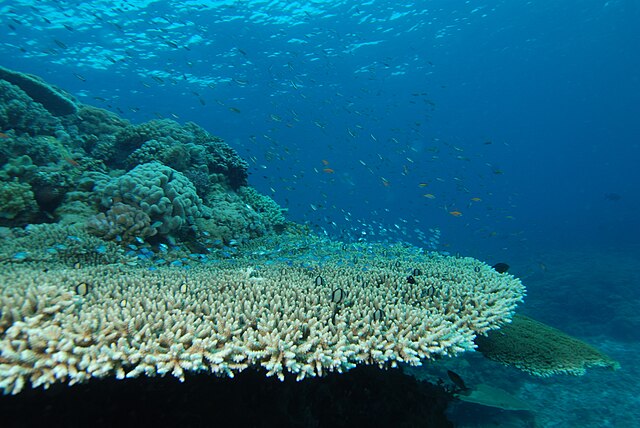
Even if their looks tempt you, some groups are best avoided for the first year or two. SPS such as Acropora demand strong light, fast flow, and stable low nutrients, and they are sensitive to swings in water quality. Non-photosynthetic (NPS) corals like carnation coral cannot grow on light and require frequent feeding—hard to sustain long-term even for advanced keepers. Take these on only after you're comfortable managing a tank and can hold parameters steady.
Summary
Choosing hardy, change-tolerant species for your first coral is the fastest route to success. Confirm your tank's stability with soft corals and zoas, move to LPS as you gain confidence, and save SPS for last—expanding in that order lets you grow a reef tank without strain.
You can browse the full list of beginner corals, including the 9 featured here, from the catalog's beginner-filtered view. For detailed care data on any species that catches your eye, check its catalog page.