How to Read a Coral Guide and Understand Taxonomy | The Relationship Between Scientific Names, Common Names, and Classification
Coral guides list multiple names and classifications: scientific names, common (trade) names, phylum, class, order, family, genus, and species. Understanding these relationships allows aquarists to use guide information more accurately and develop a deeper scientific understanding of corals.
Key Takeaways
Coral guides list multiple names and classifications: scientific names, common (trade) names, phylum, class, order, family, genus, and species. Understanding these relationships allows aquarists to use guide information more accurately and develop a deeper scientific understanding of corals.
"I opened a coral guide, but there are so many scientific names and taxonomic categories that I can't understand them," say many coral keepers. While it is possible to identify corals by trade name alone, deeper knowledge requires learning to read guide information systematically. This article explains the structure of coral guides and the relationships between scientific names, common names, and taxonomic systems. By using guides effectively, aquarists can develop a scientific understanding of corals and make more informed care decisions.
Three Naming Systems in Coral Guides
Coral guides typically list three different naming systems.
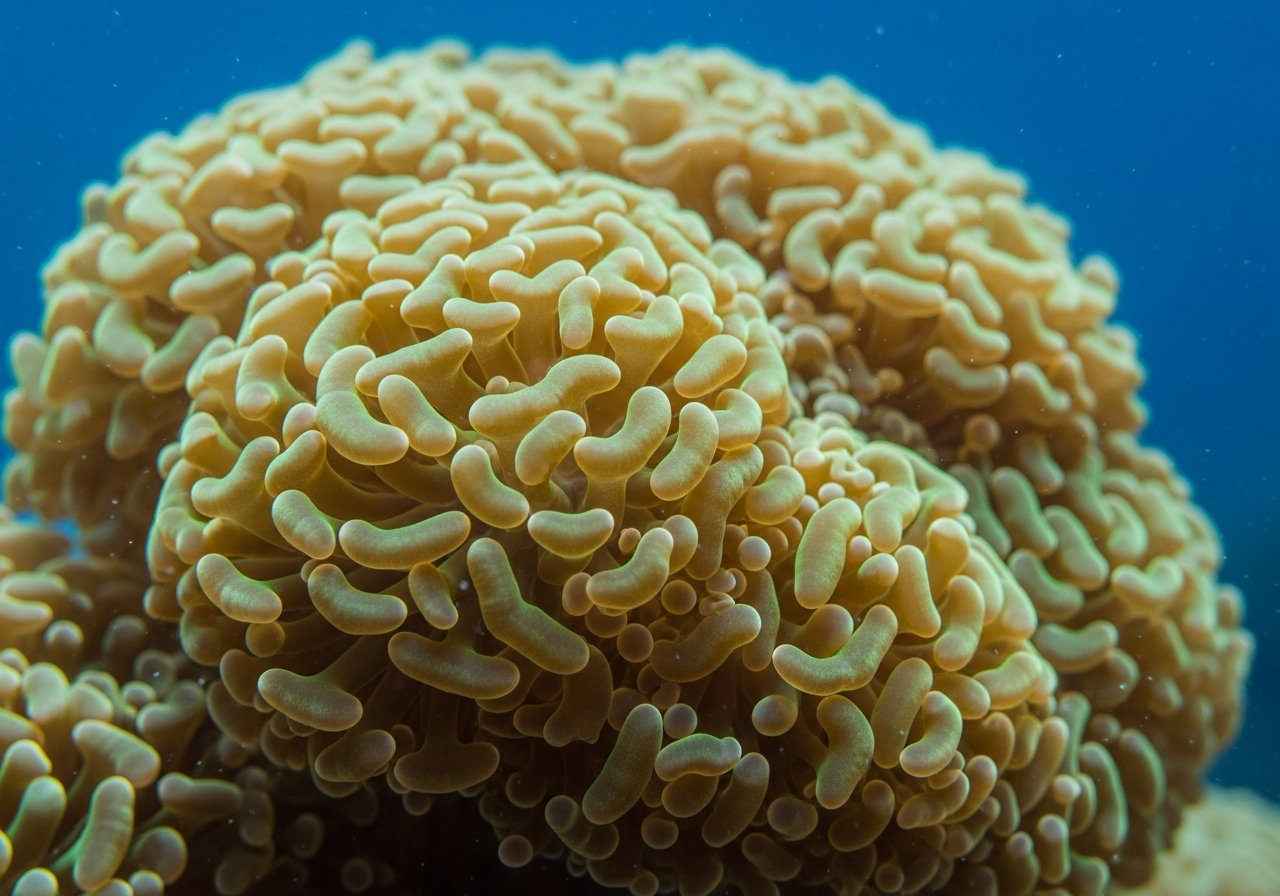
Scientific Name is the formal name based on international biological classification. For example, "Euphyllia glabrescens" is the scientific name for hammer coral. Scientific names consist of two words (genus and species epithet) and clearly define which organisms are being discussed worldwide. Scientific names follow Linnaean binomial nomenclature and are regulated by the International Code of Zoological Nomenclature (ICZN).
Common Name is a colloquial term used in Japan. The same species may have different regional or historical names. For example, hammer coral is known by multiple names—"hammer," "torch," "frogspawn"—and is sometimes mistaken for different species.
Trade Name is a commercial product name used in the aquarium industry for convenience. Examples include "hammer coral" and "torch coral." The same scientific species may have multiple trade names. Trade names are often assigned for commercial reasons or consumer convenience, so scientific accuracy is not always guaranteed.
The Hierarchical Structure of Taxonomic Classification
Guide classification information is typically displayed in the following hierarchy:
Phylum → Class → Order → Family → Genus → Species
Nearly all corals belong to the phylum Cnidaria and the class Anthozoa. Hammer coral specifically belongs to the family Cariophylliidae and the genus Euphyllia. This hierarchical structure reflects evolutionary relationships; higher ranks indicate more distant common ancestors, while lower ranks indicate closer common ancestors.
Why Corals in the Same Family Have Different Care Requirements
Even when corals share the same family classification in a guide, their care characteristics may differ significantly. This reflects how organisms within the same family have adapted to different environments over evolutionary history. For example, within the family Cariophylliidae, some corals are adapted to deep water while others thrive in shallow water, resulting in very different light requirements.
For instance, many corals in the family Alcyoniidae are soft corals with flexible skeletons, but individual species within this family have different light requirements. Rather than relying solely on family-level information, it is important to consult detailed care information at the genus and species level. In practice, corals within the same family but different genera often differ by 30% or more in light intensity, water flow, and temperature requirements.
Scientific Name Changes and Confusion from Outdated Names
Coral taxonomy continues to evolve, and scientific names are sometimes revised. For example, multiple species formerly classified under "Acropora" were reclassified into the new genus "Isopora" based on DNA analysis. When old and new guides list different scientific names, this reclassification is usually the reason. While such changes are based on more accurate phylogenetic classification, they can confuse aquarists.
Since some corals still circulate under older names, it is recommended to check a guide's publication date and consult multiple sources if needed. Online databases such as "World Register of Marine Species" maintain current scientific names alongside synonyms (older names) and can be helpful for verification.
Effective Use of Guide Information and Understanding Its Limitations
Coral guides are valuable resources for learning the care methods and ecology of individual species. However, information in guides such as "appropriate light intensity" or "suitable water temperature" can vary depending on aquarium conditions and individual variation. For example, even if a guide specifies "300–400 μmol m⁻² s⁻¹" illumination, the actual optimal value may differ by 20–30% depending on the specimen's acclimation and the spectrum of your tank.
Rather than treating a guide as an "absolute standard," it is better to view it as a "reference." Comparing guide information with your own tank observations leads to more successful care. By combining the scientific foundations learned from guides with actual husbandry experience, keepers can truly understand each specimen's care characteristics.