Palythoa Grandis
Palythoa grandis(Verrill, 1900)Species
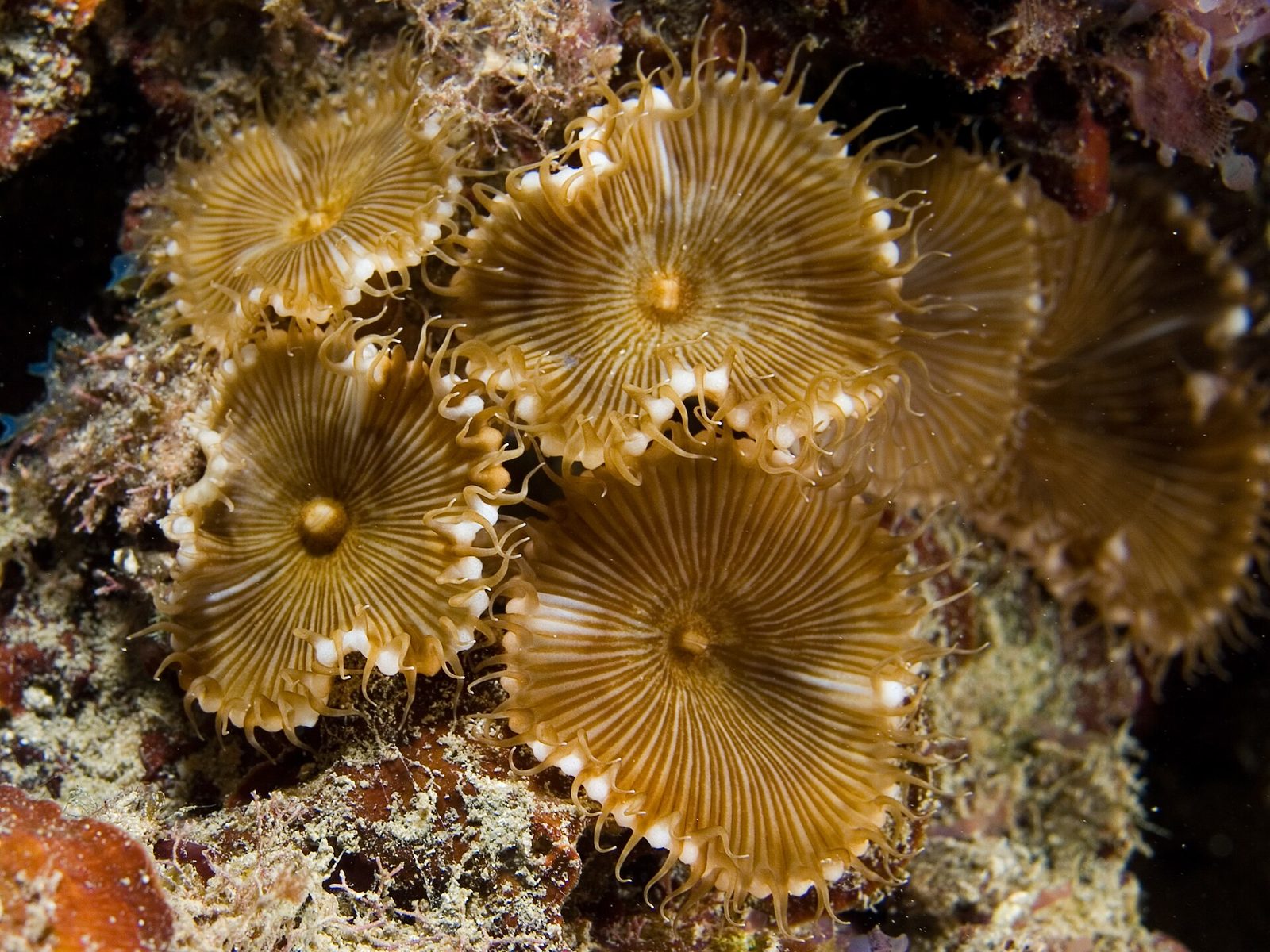
Large-polyped Palythoa species. Brown to green large polyps form colonies. Very hardy and tolerant of water quality changes. Popular soft coral for beginners.
Names & Synonyms
- CommonPalythoa Grandis
- Commonオオマルハナギンチャク
- SynonymProtopalythoa grandis
Overview
Palythoa grandis (family Sphenopidae) is a colonial hexacoral (a button-polyp/zoanthid relative) distributed across Atlantic and Caribbean reefs, bearing especially large polyps for the genus. Large polyps several centimeters across cluster together, showing greens, browns, and golds. It is relatively easy to keep, tolerating moderate lighting and gentle to moderate flow. Feeding is optional, though the thick polyps may capture small seafood pieces. Because Palythoa can contain the potent toxin palytoxin, never handle it with bare hands, wash thoroughly afterward, and never boil or use hot water on it—strict safety precautions are essential. It can be propagated by fragging, but toxin precautions during handling are especially important for this species.
Care Specifications
| Temperature | 24〜27℃ |
|---|---|
| Specific gravity | 1.023〜1.025 |
| Salinity | 33〜35 ppt |
| KH (carbonate hardness) | 8〜12 dKH |
| Lighting | Medium |
| Water flow | Medium |
| Placement | Middle |
Care Points
- Lighting—Low to medium light sufficient
- Flow—Low to medium
- Feeding—Feed chopped shrimp or squid directly to polyps
- Notes—Contains palytoxin. Never handle with bare hands
Regulatory & Conservation
- Notes:
- スナギンチャク目(Palythoa grandis, Zoantharia)。CITES 非掲載。
Sources
- AlgaeBarn: Water Parameters 101(careSpec)
- DOC NZ / CITES-listed corals(Zoantharia 非掲載)(regulatory)
- Wikipedia(detail)
Related care articles
Mixed-Coral Tank Layout Planning | Co-existence Examples for SPS, LPS, and Soft Corals
When culturing different types of corals in a single tank, understanding each group's ecological niche—including their position in the food chain, light requirements, and water flow needs—and realizing competition avoidance through placement is key to success...
Choosing Substrate for Coral Tanks: Comparing Bare Bottom, Powder Sand, and Live Sand with Maintenance
The choice of substrate for a saltwater coral tank is directly connected not just to appearance but also to water quality management and the ecology of marine life. Here we organize the characteristics of bare bottom, powder sand, and live sand, and the management approach suited to each.
Saltwater Aquarium Quarantine (QT) Systems | Pathogen Management and Setup Methods for New Introductions
Explaining the importance of quarantine (isolation) processes when introducing new corals and organisms, along with practical setup methods. An implementation guide to realize preventative husbandry, from QT tank sizing and feeding to pathogen checking procedures and timing for introduction to the main tank.
Get this species
Buy livestock directly from breeders and specialist shops on BreederDirect (br-choku), our sister marketplace for corals and marine fish.
* Opens an external site (BreederDirect / br-choku, Japanese) in a new tab.