Understanding CITES (Washington Convention) and Coral Import Restrictions | Practical Points to Know Before Purchasing
This article outlines the mechanisms of CITES (Washington Convention) as they relate to coral trade, based on primary sources. We explain the regulatory framework for reef-building corals and practical points that hobbyists should understand.
Key Takeaways
This article outlines the mechanisms of CITES (Washington Convention) as they relate to coral trade, based on primary sources. We explain the regulatory framework for reef-building corals and practical points that hobbyists should understand.
As you keep and record corals, you may have wondered whether a particular coral is subject to international trade restrictions. Most ornamental corals are imported from abroad, and CITES (the Convention on International Trade in Endangered Species of Wild Fauna and Flora, commonly known as the Washington Convention) plays a role in their distribution. This article, based on information available from CITES headquarters and Species+, the official CITES species database, outlines the regulatory framework for reef-building corals and practical points that hobbyists should know.
What Is CITES and How Do Appendices Work?
CITES is a treaty that regulates international trade to protect wild animal and plant species from extinction. Target species are divided into three tiers—Appendices I, II, and III—based on the strength of regulation.
- Appendix I: Species with exceptionally high risk of extinction, for which international trade for commercial purposes is generally prohibited
- Appendix II: Species not currently facing extinction risk, but that would face potential extinction if trade were not strictly managed; commercial trade is possible but requires permits issued by the exporting country's government
- Appendix III: Species for which one or more contracting parties are seeking international cooperation for domestic protection
In understanding coral trade, it is important to grasp the difference between Appendices I and II, particularly the positioning of Appendix II, where trade itself is not prohibited but requires permits and other procedures.
Reef-Building Corals (Order Scleractinia) Are Listed Under Appendix II
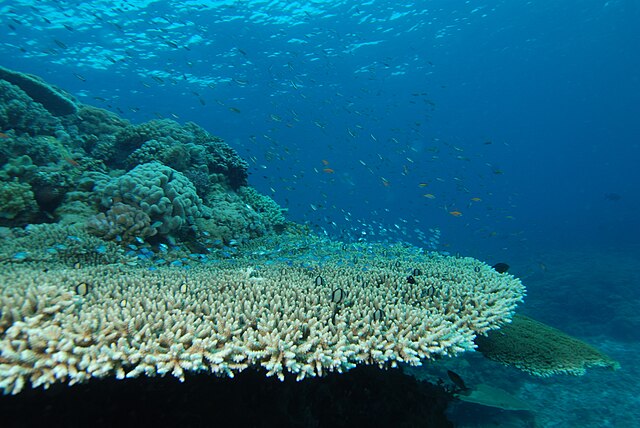
According to CITES headquarters, the order Scleractinia, which includes reef-building corals, is listed as Scleractinia spp. under Appendix II. A distinctive feature is that the regulation covers not just specific species, but broadly includes living corals and skeletons belonging to the order Scleractinia.
This stems from the fact that scleractinian skeletons often resemble each other across species, making it difficult to accurately distinguish species-level differences in trade. Indeed, at the 19th Conference of the Parties to CITES (held in Panama in 2022), an identification guide was published to help customs inspectors and other officials identify scleractinians. In CITES practice, because species-level identification is difficult, identification at the genus level serves as the standard. Among groups with exceptionally high species numbers, such as Acropora and branching hard corals, this tendency is especially pronounced.
How Soft Corals Are Treated Varies by Species
Meanwhile, soft corals (subclass Octocorallia) are not grouped together like the order Scleractinia; instead, their regulatory status varies by species. For example, the group containing blue coral (Heliopora coerulea) is confirmed to be listed under Appendix II, but whether genera like mushroom corals (Sarcophyton) and sea whips—which circulate widely among aquarium stores and hobbyists—are all regulated similarly is unclear; their status may vary by species. When purchasing or recording soft corals, if you want to know whether a species is regulated, the most reliable approach is to check Species+ directly by scientific name, rather than making assumptions.
How CITES Is Implemented in Japan
Within Japan, CITES is implemented through a combination of import/export controls at the border based on the Foreign Exchange and Foreign Trade Act, and domestic trade regulations based on the Species Conservation Act.
- Appendix I listed species: International trade is regulated, and domestic transfer is also subject to regulation under the Species Conservation Act as internationally rare and endangered wild fauna and flora
- Appendix II listed species: Commercial trade itself is possible, but the species enters the country through procedures different from ordinary imports, such as verification of permits issued by the exporting country's government
- Appendix III listed species: Export permits or certificates of origin may be required, depending on the country of origin
The specific application windows, forms, and required documents vary depending on the form of trade and the item in question, so it is most reliable to check guidance from relevant agencies such as the Ministry of Economy, Trade and Industry and customs.
What Hobbyists Should Know in Practice
From the perspective of an individual keeping corals, what matters is the following:
- Most ornamental corals in domestic circulation have been imported by legitimate aquarium importers who have followed necessary permit procedures
- Personally bringing corals back from abroad or ordering them without authorization may violate regulations on CITES-listed species
- Even small-scale trading for hobby purposes may require proper procedures if the species is covered by CITES; it is worth keeping this in mind
- If you want to know specifically whether a coral you plan to purchase is regulated, the most reliable method is to check the scientific name and consult primary sources such as Species+
ReefBook is a site dedicated to coral reference and personal collection records, and does not provide services such as import facilitation or permit acquisition assistance. For final determination regarding regulations and procedures, please always consult primary sources or official agency guidance.
Summary
Reef-building corals are broadly regulated under CITES Appendix II, while soft corals vary by species and cannot be treated uniformly. As a hobbyist, being mindful of whether your supplier handles specimens that have followed proper procedures, and developing the habit of checking primary sources such as Species+ when a species interests you, will give you confidence. For information on coral selection, also see Important Things to Know When Buying Corals Online and Differences Between Wild-Caught and Aquacultured Corals.