Pocillopora (Cauliflower Coral)
Pocillopora sp.Lamarck, 1816Genus
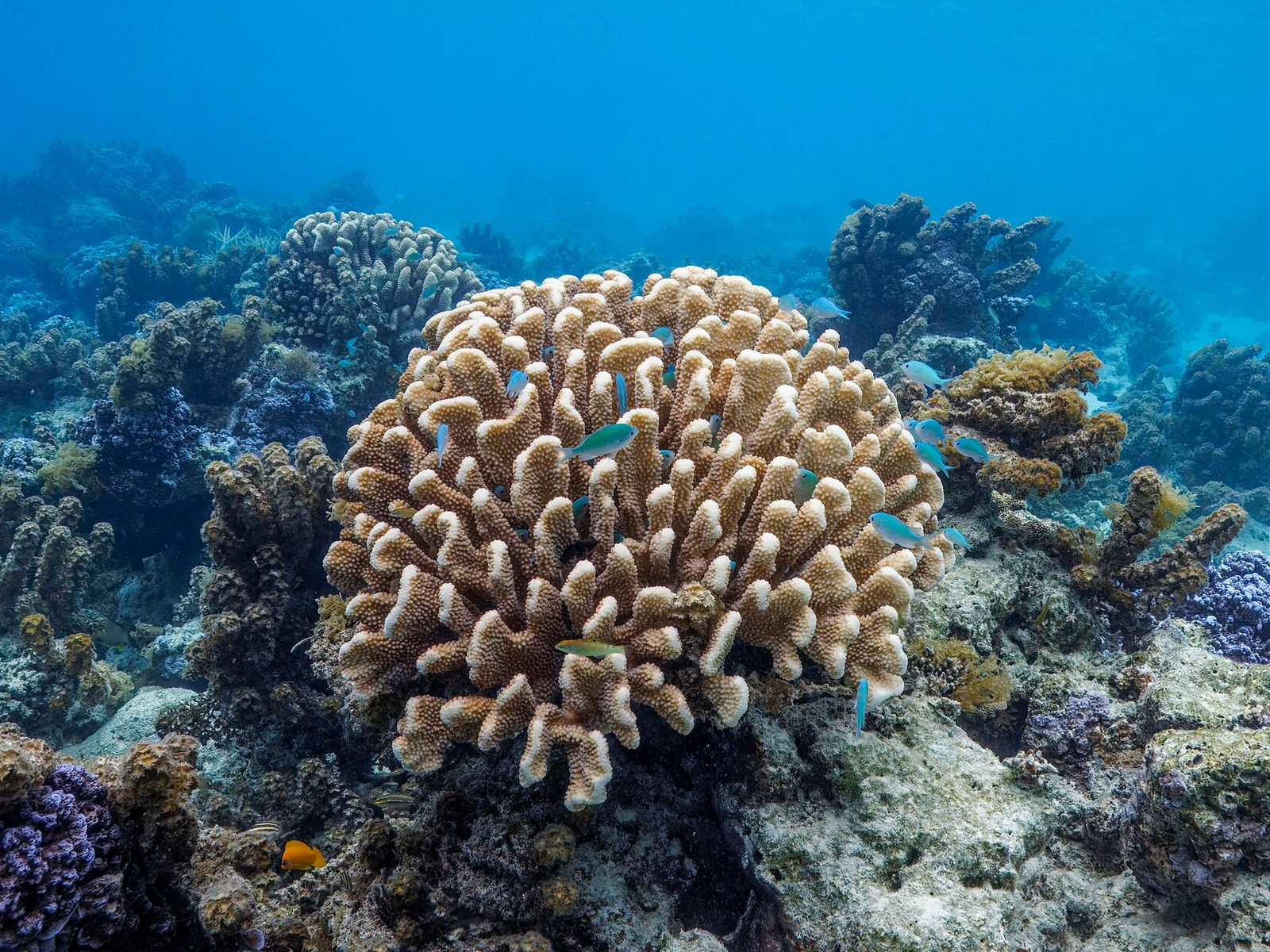
SPS coral branching in cauliflower shape. Pink and green are common. Hardier than Acropora — ideal SPS starter. Fast-growing and visually impressive.
Names & Synonyms
- CommonPocillopora (Cauliflower Coral)
- Commonハナヤサイサンゴ
Overview
Pocillopora (family Pocilloporidae) is a small-polyp stony (SPS) coral widely distributed across shallow Indo-Pacific and eastern Pacific reefs. Its short, branching arms are densely covered with wart-like bumps (verrucae) in a distinctive form, showing pinks, greens, browns, and purples; the representative species is Pocillopora damicornis. Provide moderate to strong lighting and moderate to strong turbulent flow, with stable calcium and alkalinity. More tolerant than Acropora, it is recommended as an SPS beginner species. It grows quickly and frags easily, though it can host pests, so dipping on introduction is advisable. Hardy and prolific, it is a popular SPS that forms reef-tank structure.
Care Specifications
| Type | SPS |
|---|---|
| Temperature | 24〜27℃ |
| Specific gravity | 1.023〜1.025 |
| Salinity | 33〜35 ppt |
| KH (carbonate hardness) | 8〜11 dKH |
| Calcium (Ca) | 420〜450 mg/L |
| Magnesium (Mg) | 1300〜1400 mg/L |
| Lighting | High |
| Water flow | High |
| Placement | Top |
Care Points
- Lighting—Medium to high light. 200+ PAR recommended
- Flow—Medium to strong turbulent flow
- Water Quality—Ca 420-450ppm, KH 7-9. Stability is key
- Notes—May host symbiotic crabs and shrimp
Regulatory & Conservation
- CITES:
- Appendix II
- Notes:
- イシサンゴ目(Pocillopora, Pocilloporidae)=ハナヤサイサンゴ。CITES 附属書II。
Sources
- AlgaeBarn: SPS/LPS care (PAR/flow)(careSpec)
- AlgaeBarn: Water Parameters 101(careSpec)
- DOC NZ / CITES-listed corals (Scleractinia spp. = App. II)(regulatory)
- Wikipedia(detail)
Related corals of the same type
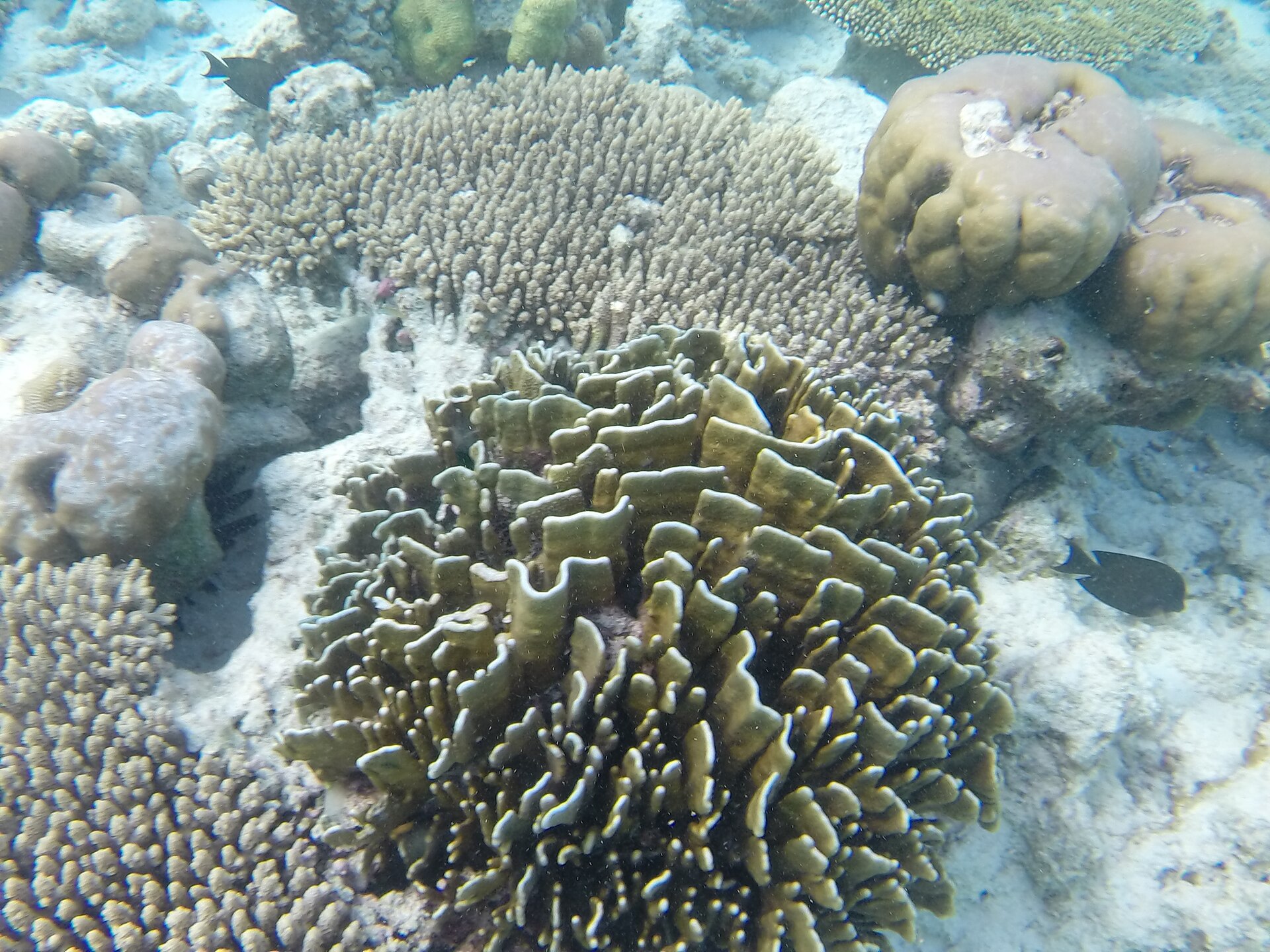 Blue Coralアオサンゴ(ヘリオポラ)spsIntermediateThe only octocoral with a solid blue skeleton. Taxonomically unique and hardy, but CITES Appendix II — handle with care.
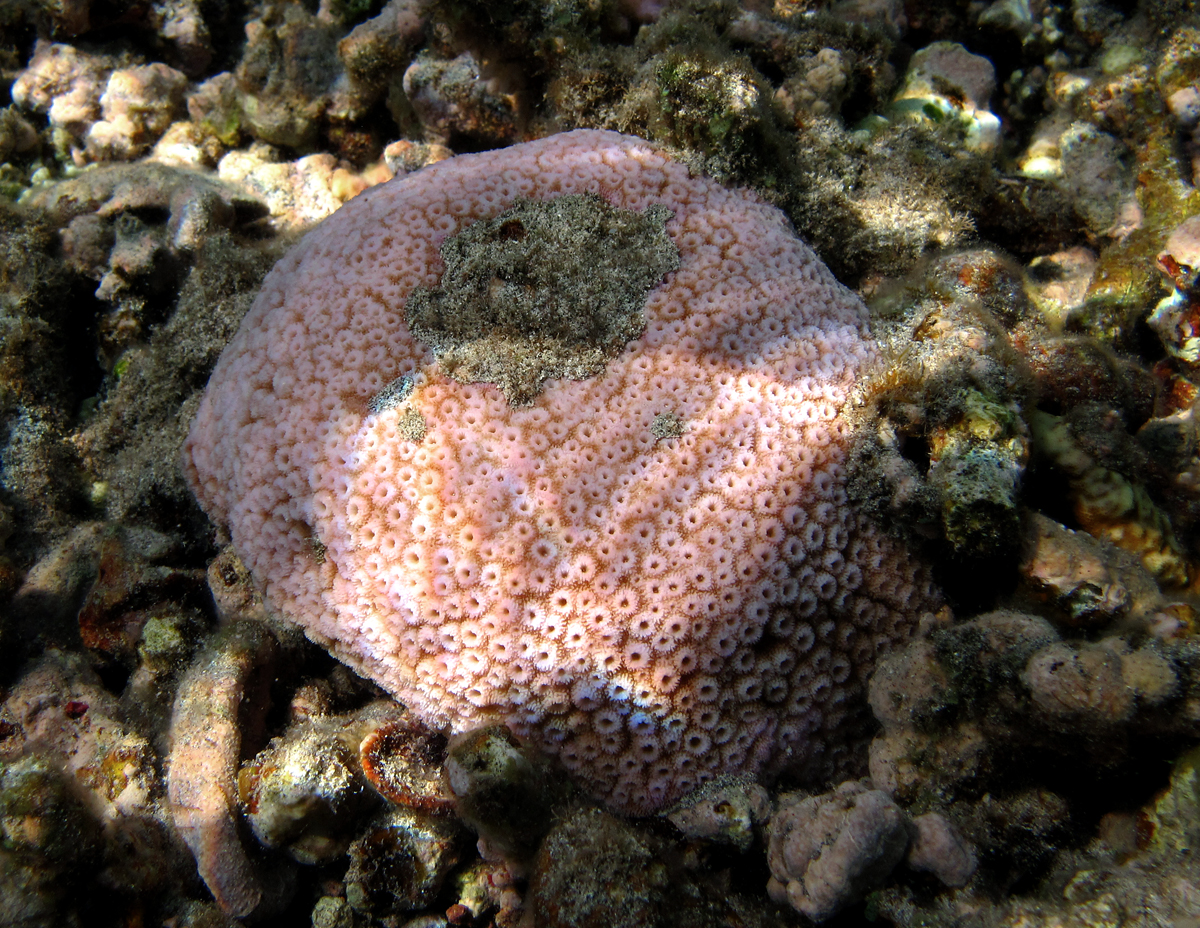 Astreoporaアストレオポラ(スターコーラル)SPSBeginnerA massive SPS in the Acropora family. Named for star-shaped scattered corallites; a hardy entry-level SPS.
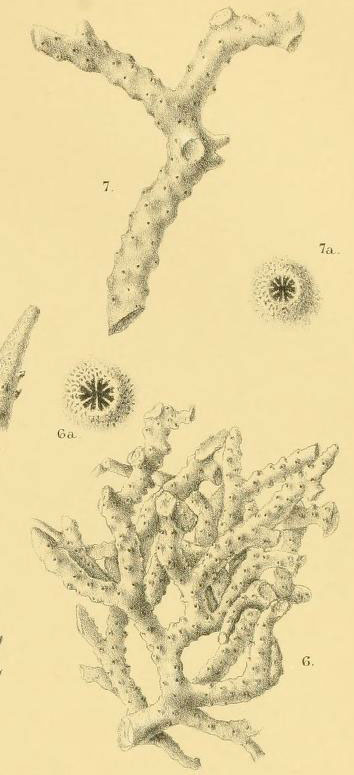 AnacroporaアナクロポラSPSIntermediateA branching SPS related to Acropora but lacking axial corallites, forming slender delicate branches with pastel coloration.
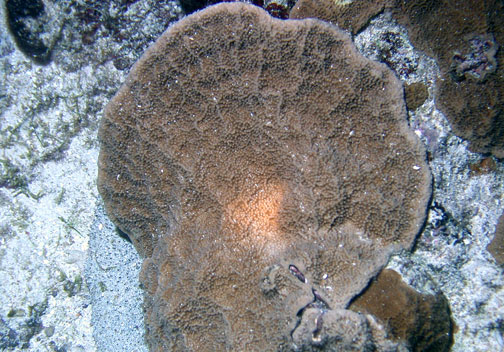 IsoporaイソポラSPSIntermediateA branching-to-encrusting SPS formerly placed in Acropora. Bearing multiple axial corallites, it is hardier and easier than Acropora.
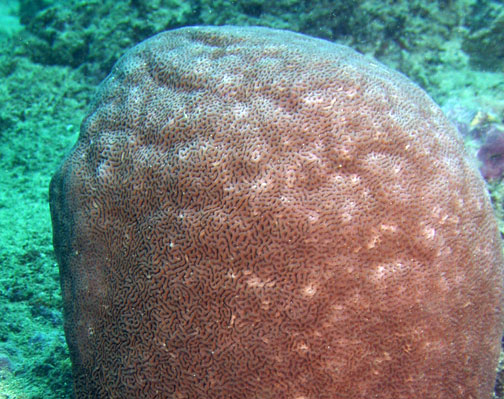 CoscinaraeaコスキナラエアSPSBeginnerA hardy coral related to Psammocora with a rough texture. Encrusting, with wide tolerance of light and flow.
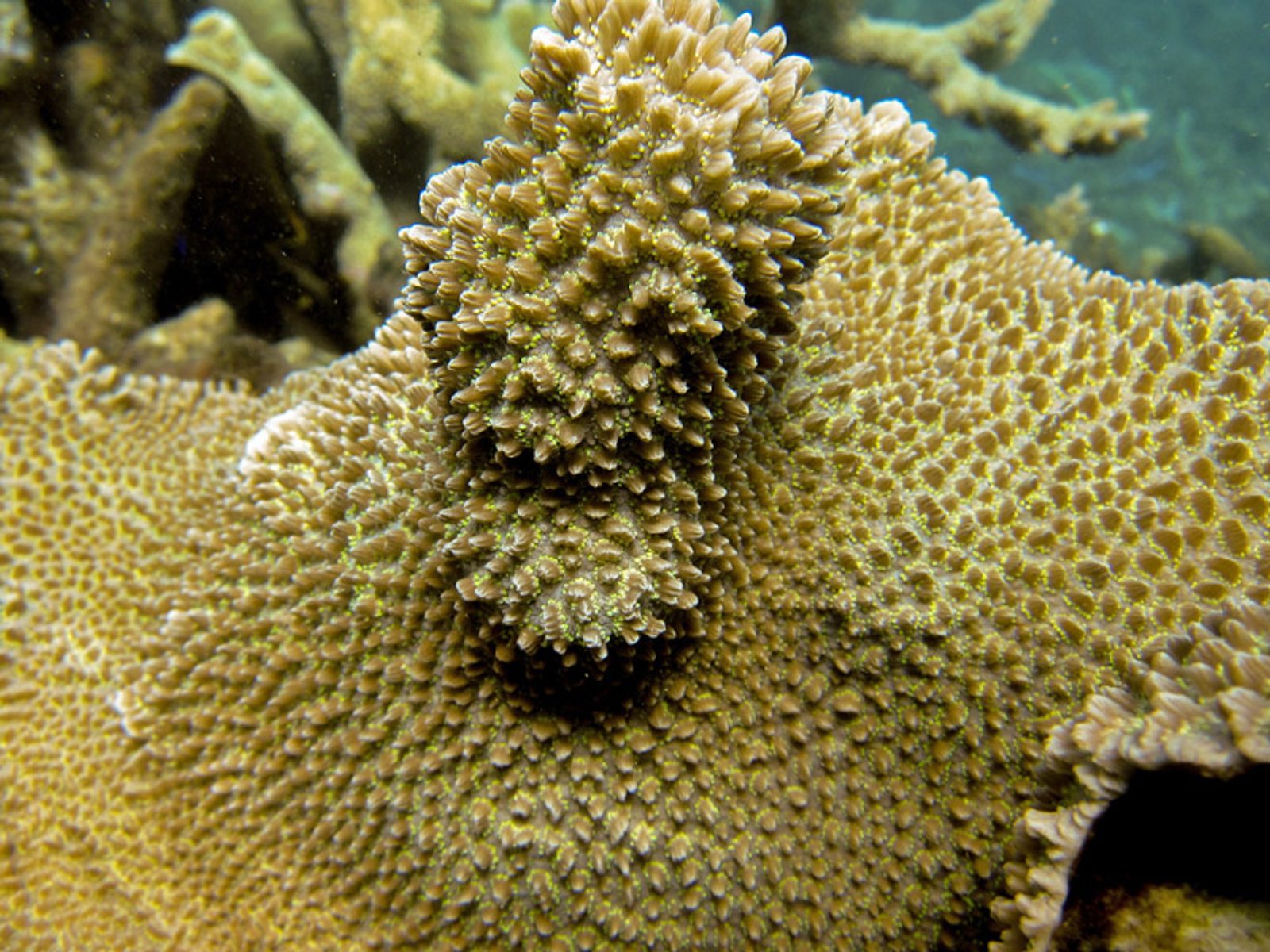 Hydnophora (Horn Coral)コモンサンゴspsIntermediateCoral with dense small bumps (hydnophores) on surface. Between LPS and SPS in care. Fast-growing with beautiful fluorescent green. Aggressive — careful placement needed.
Related care articles
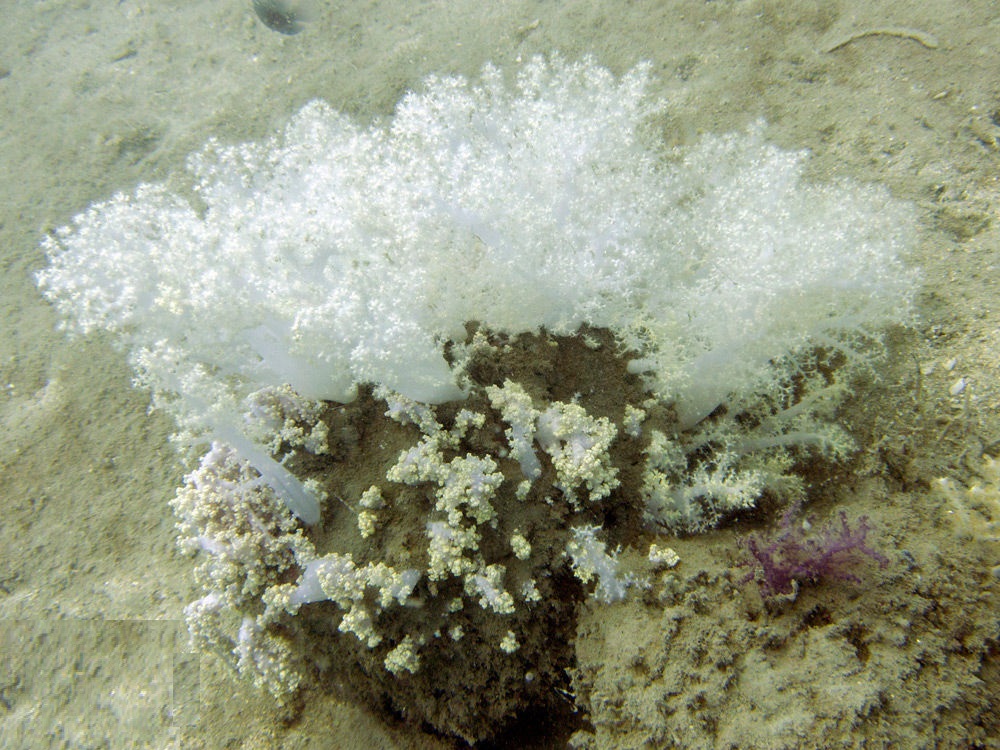
SPS Coral Infections and Disease Prevention | Distinguishing White Spot Disease, Planula Settlement Disease, and Mixed Infections
When SPS corals contract infections, multiple warning signals appear. The initial sign is fading color and loss of translucency, where healthy specimens lose their transparency and vibrant coloration. White Spot Disease produces numerous microscopic white lesions on the coral's surface, and as the condition progresses, it spreads across the entire body. This is a typical symptom of parasitic or bacterial infection. Another form of infection, Planula Settlement Disease, occurs immediately after larval settlement and causes newly settled small colonies to necrose rapidly.
SPS Corals Other than Acropora | Cultivation Characteristics of Pocillopora, Seriatopora, and Stylophora
While SPS corals are often exemplified by Acropora (staghorn coral), there are many other species with different growth patterns such as branching and massive forms, including Pocillopora and Seriatopora. This article introduces the characteristics and cultivation considerations for each.
Montipora Morphological Classification and Rearing Environment | Understanding the Differences from Acropora
As a representative SPS species, Montipora exhibits diverse growth forms that differ from Acropora, another SPS type. This article explains the characteristics of each form—digitate, plate, and encrusting—and how to optimize light, water flow, and nutrient environments for each.
Get this species
Buy livestock directly from breeders and specialist shops on BreederDirect (br-choku), our sister marketplace for corals and marine fish.
* Opens an external site (BreederDirect / br-choku, Japanese) in a new tab.